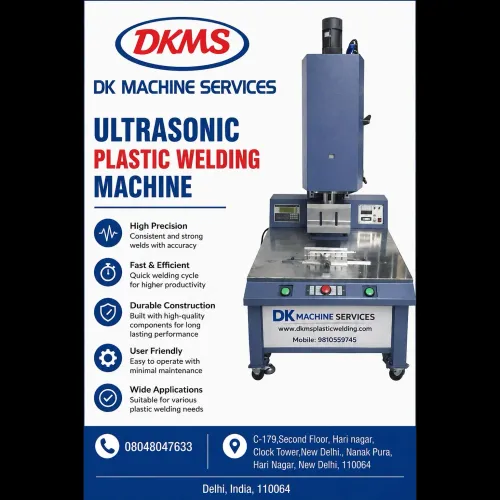
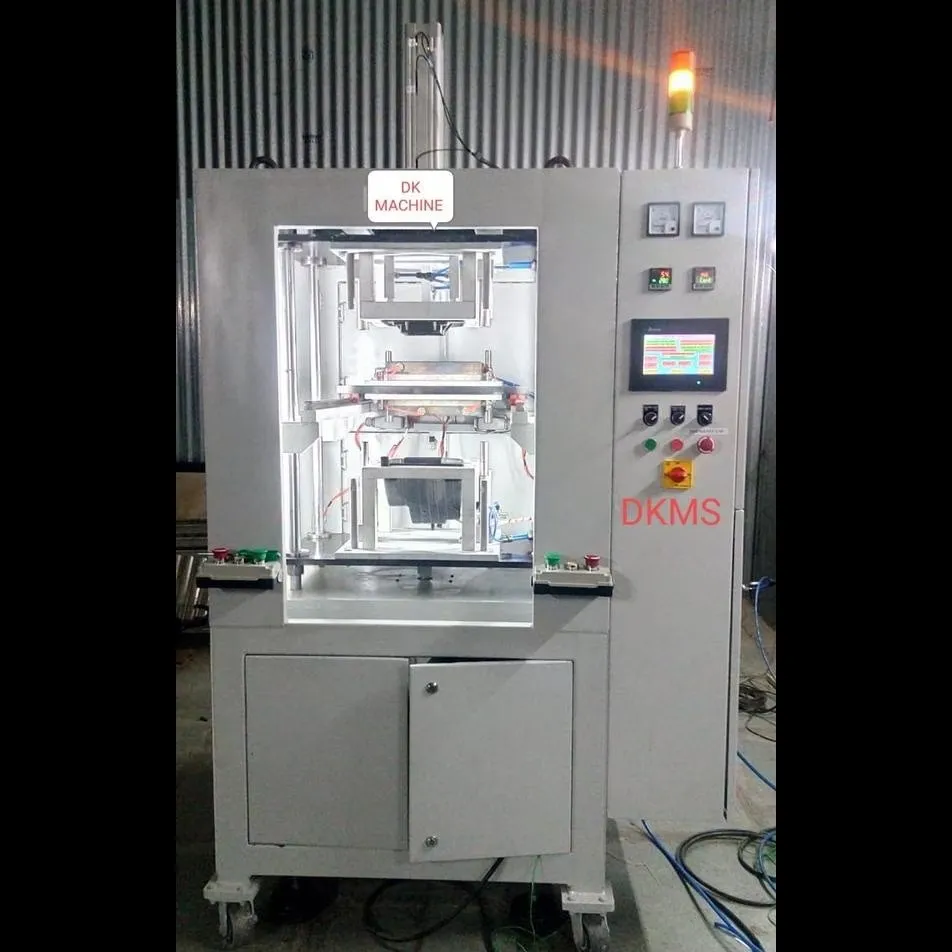
Industrial manufacturers need a plastic welding machine that can deliver consistent weld quality, fast production cycles and reliable performance without creating unnecessary operating costs. Choosing an ultrasonic plastic welding machine, therefore, should not be based only on machine price or wattage. The correct system depends on the plastic material, component design, welding area, production volume, cycle time, frequency, tooling and automation requirements.
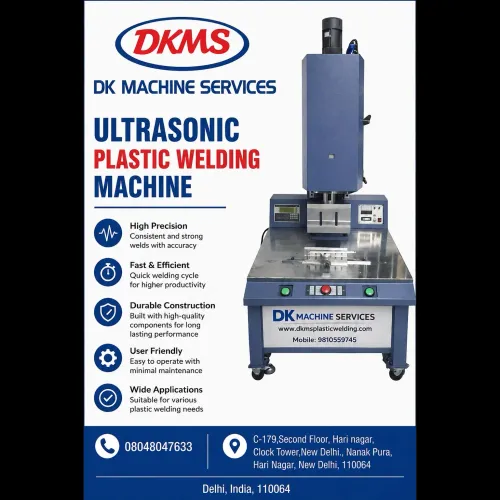
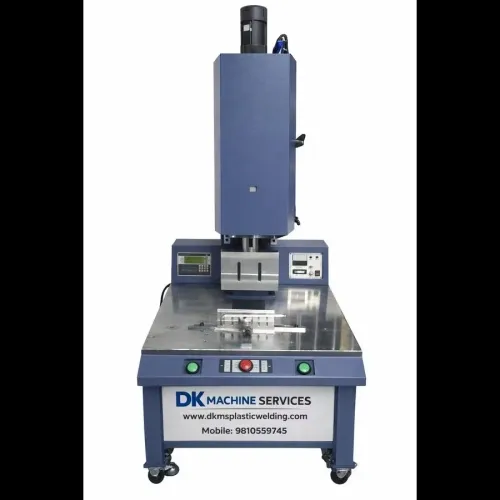
DK Machine Service offers ultrasonic plastic welding machines in different configurations, including digital and semi-automatic systems, with application-specific solutions for industrial plastic components.
What Is an Ultrasonic Plastic Welding Machine?
An ultrasonic plastic welding machine joins compatible thermoplastic components by converting electrical energy into high-frequency mechanical vibrations. These vibrations create localized heat at the joint interface, allowing the plastic surfaces to soften and fuse under controlled pressure.
Unlike conventional adhesive-based assembly, ultrasonic welding can eliminate the need for glue, solvents and mechanical fasteners in suitable applications. This makes the technology attractive for manufacturers looking for fast, repeatable and clean plastic assembly.
1. Start With the Plastic Material
The first step in selecting an industrial ultrasonic welding machine is understanding the material being welded. Different thermoplastics respond differently to ultrasonic energy depending on their composition, grade, additives, thickness and melting characteristics.
Materials such as ABS, polypropylene, polyethylene, polycarbonate and nylon can be suitable for ultrasonic welding, but actual weldability depends on the specific component and material combination.
Manufacturers should therefore evaluate the actual material grade rather than selecting a machine only from a general material name.
2. Consider Component Size and Weld Area
Component dimensions directly influence machine selection. A small electronic housing may require a different ultrasonic configuration from a large automotive plastic component.
The weld area, component wall thickness, joint geometry and number of welding points should be evaluated before selecting machine power and frequency. For larger or more complex components, customized tooling may be required to distribute ultrasonic energy correctly across the welding area.
3. Select the Correct Ultrasonic Frequency
Frequency is one of the most important factors when choosing an ultrasonic welding machine. Industrial systems can be available in frequencies such as 15 kHz, 20 kHz, 30 kHz, 35 kHz and 40 kHz, depending on the application.
Lower-frequency systems can be appropriate for applications requiring higher amplitude and power, while higher frequencies can be useful for smaller or more delicate components. The correct frequency should ultimately be determined by the material, component size, weld geometry and required weld characteristics.
4. Choose Machine Power According to the Application
Higher wattage does not automatically mean better welding. The required power depends on the component, weld area, material, joint design, production speed and required weld strength.
For example, DK Machine Service lists a 15 kHz, 2600 W ultrasonic plastic welding machine and a 20 kHz, 1500 W digital model. This illustrates why machine selection should be application-specific rather than based simply on choosing the highest available power.
An undersized machine can result in inconsistent welding, while excessive capacity can increase investment without providing a meaningful production advantage.
5. Pay Attention to Ultrasonic Horn and Fixture Design
The ultrasonic horn, also known as a sonotrode, transfers vibration to the plastic component. Its geometry must correspond to the welding area and component design.
A suitable fixture is equally important because it supports the component and helps maintain accurate positioning during the welding cycle. Poor tooling can result in uneven welds, component deformation or inconsistent production.
For customized plastic components, manufacturers should discuss the component drawing or sample, weld location and production requirements with the machine supplier before finalizing the equipment.
6. Evaluate Production Volume and Cycle Time
Production requirements should influence the machine configuration. A manufacturer producing a limited number of components may require a semi-automatic machine, while a high-volume production facility may benefit from a more automated system.
The objective should be to achieve the required cycle time, repeatability and production output without unnecessarily increasing machine complexity.
For industrial production, manufacturers should evaluate not only the welding time but also component loading, unloading, inspection and integration with the existing production line.
7. Digital Control Can Improve Process Repeatability
Modern digital ultrasonic welding machines can provide greater control over welding parameters. For example, DK Machine Service's DK2015D 20 kHz model includes welding modes based on time, energy and time + energy, along with HMI-based controls.
Such controls can be valuable when manufacturers need repeatable welding conditions across large production batches.
8. Compare Manual, Semi-Automatic and Automatic Systems
The required level of automation should match production requirements.
A manual system may be suitable for prototypes, low-volume production or applications where operator flexibility is important. A semi-automatic machine can provide a balance between operator involvement and process consistency. Fully automated systems become more attractive when manufacturers require high production volumes, controlled cycle times and integration with other manufacturing equipment.
9. Consider Long-Term Operating Costs
The purchase price is only one part of the investment. Manufacturers should also consider machine maintenance, tooling life, energy consumption, replacement components, operator requirements and technical support.
A machine that provides stable welding performance and minimizes production interruptions can deliver better long-term value than a cheaper machine that creates frequent quality or maintenance problems.
10. Check Whether Customized Welding Solutions Are Available
Standard machines may not be suitable for every plastic component. Complex geometries, multiple weld locations, specialized production requirements and automated assembly may require a customized ultrasonic welding solution.
DK Machine Service provides customized plastic welding solutions based on component dimensions, material, weld requirements, production volume and automation requirements.
Ultrasonic Welding for Different Industries
Ultrasonic plastic welding can be used across a wide range of manufacturing applications, including automotive components, electronics, electrical products, medical products, packaging, appliances and consumer products.
For electronics manufacturing, for example, ultrasonic welding can be used for plastic housings, connectors, switches, sensors and other thermoplastic assemblies where repeatable joining is required.
For packaging applications, the machine and tooling can be selected according to the packaging material, component geometry, required weld strength and production volume.
Why Choose DK Machine Service?
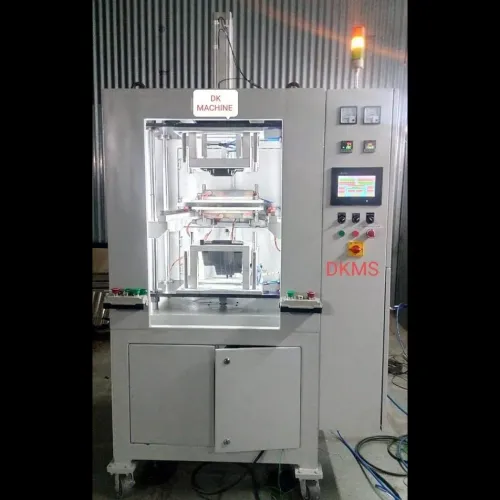
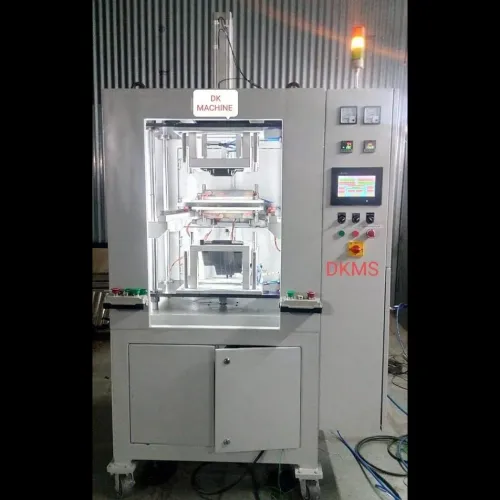
DK Machine Service is a Delhi-based manufacturer and service provider of plastic welding machinery, offering analog ultrasonic plastic welding machines, digital ultrasonic plastic welding machines, hot-plate welding machines, digital ultrasonic power generators and customized plastic welding solutions.
For industrial buyers, the selection process can begin with the actual component rather than simply selecting a machine from a catalogue. Sharing the plastic material, component drawing or sample, weld location, production quantity and desired cycle time can help determine a suitable machine, frequency, power configuration, horn and fixture.
Frequently Asked Questions
Which ultrasonic plastic welding machine is best for industrial production?
The best machine depends on the plastic material, component size, weld area, joint design, production volume, required cycle time and desired automation level. There is no single machine configuration that is ideal for every industrial application.
What frequency should I choose for ultrasonic plastic welding?
Common industrial frequencies include 15 kHz, 20 kHz, 30 kHz, 35 kHz and 40 kHz. The appropriate frequency should be selected according to the component, material, weld area and required welding performance.
Is a higher-wattage ultrasonic welding machine always better?
No. Machine power should match the application. Selecting unnecessarily high power can increase investment costs, while insufficient power may affect weld consistency.
Can ultrasonic welding be used for high-volume manufacturing?
Yes. Ultrasonic welding can be suitable for high-volume production where fast cycles, repeatability and process control are important. Automation can further improve production consistency.
Can the ultrasonic horn be customized?
Yes. Horns can be designed according to the component geometry and required welding area. Proper horn and fixture design is essential for efficient transfer of ultrasonic energy.
What information is required before buying an ultrasonic welding machine?
Manufacturers should ideally provide the plastic material, component sample or drawing, component dimensions, weld location, required weld strength, expected production quantity and desired cycle time. These details help determine the appropriate machine configuration.
DK Machine Service offers ultrasonic plastic welding machines in different configurations, including digital and semi-automatic systems, with application-specific solutions for industrial plastic components.
What Is an Ultrasonic Plastic Welding Machine?
An ultrasonic plastic welding machine joins compatible thermoplastic components by converting electrical energy into high-frequency mechanical vibrations. These vibrations create localized heat at the joint interface, allowing the plastic surfaces to soften and fuse under controlled pressure.
Unlike conventional adhesive-based assembly, ultrasonic welding can eliminate the need for glue, solvents and mechanical fasteners in suitable applications. This makes the technology attractive for manufacturers looking for fast, repeatable and clean plastic assembly.
1. Start With the Plastic Material
The first step in selecting an industrial ultrasonic welding machine is understanding the material being welded. Different thermoplastics respond differently to ultrasonic energy depending on their composition, grade, additives, thickness and melting characteristics.
Materials such as ABS, polypropylene, polyethylene, polycarbonate and nylon can be suitable for ultrasonic welding, but actual weldability depends on the specific component and material combination.
Manufacturers should therefore evaluate the actual material grade rather than selecting a machine only from a general material name.
2. Consider Component Size and Weld Area
Component dimensions directly influence machine selection. A small electronic housing may require a different ultrasonic configuration from a large automotive plastic component.
The weld area, component wall thickness, joint geometry and number of welding points should be evaluated before selecting machine power and frequency. For larger or more complex components, customized tooling may be required to distribute ultrasonic energy correctly across the welding area.
3. Select the Correct Ultrasonic Frequency
Frequency is one of the most important factors when choosing an ultrasonic welding machine. Industrial systems can be available in frequencies such as 15 kHz, 20 kHz, 30 kHz, 35 kHz and 40 kHz, depending on the application.
Lower-frequency systems can be appropriate for applications requiring higher amplitude and power, while higher frequencies can be useful for smaller or more delicate components. The correct frequency should ultimately be determined by the material, component size, weld geometry and required weld characteristics.
4. Choose Machine Power According to the Application
Higher wattage does not automatically mean better welding. The required power depends on the component, weld area, material, joint design, production speed and required weld strength.
For example, DK Machine Service lists a 15 kHz, 2600 W ultrasonic plastic welding machine and a 20 kHz, 1500 W digital model. This illustrates why machine selection should be application-specific rather than based simply on choosing the highest available power.
An undersized machine can result in inconsistent welding, while excessive capacity can increase investment without providing a meaningful production advantage.
5. Pay Attention to Ultrasonic Horn and Fixture Design
The ultrasonic horn, also known as a sonotrode, transfers vibration to the plastic component. Its geometry must correspond to the welding area and component design.
A suitable fixture is equally important because it supports the component and helps maintain accurate positioning during the welding cycle. Poor tooling can result in uneven welds, component deformation or inconsistent production.
For customized plastic components, manufacturers should discuss the component drawing or sample, weld location and production requirements with the machine supplier before finalizing the equipment.
6. Evaluate Production Volume and Cycle Time
Production requirements should influence the machine configuration. A manufacturer producing a limited number of components may require a semi-automatic machine, while a high-volume production facility may benefit from a more automated system.
The objective should be to achieve the required cycle time, repeatability and production output without unnecessarily increasing machine complexity.
For industrial production, manufacturers should evaluate not only the welding time but also component loading, unloading, inspection and integration with the existing production line.
7. Digital Control Can Improve Process Repeatability
Modern digital ultrasonic welding machines can provide greater control over welding parameters. For example, DK Machine Service's DK2015D 20 kHz model includes welding modes based on time, energy and time + energy, along with HMI-based controls.
Such controls can be valuable when manufacturers need repeatable welding conditions across large production batches.
8. Compare Manual, Semi-Automatic and Automatic Systems
The required level of automation should match production requirements.
A manual system may be suitable for prototypes, low-volume production or applications where operator flexibility is important. A semi-automatic machine can provide a balance between operator involvement and process consistency. Fully automated systems become more attractive when manufacturers require high production volumes, controlled cycle times and integration with other manufacturing equipment.
9. Consider Long-Term Operating Costs
The purchase price is only one part of the investment. Manufacturers should also consider machine maintenance, tooling life, energy consumption, replacement components, operator requirements and technical support.
A machine that provides stable welding performance and minimizes production interruptions can deliver better long-term value than a cheaper machine that creates frequent quality or maintenance problems.
10. Check Whether Customized Welding Solutions Are Available
Standard machines may not be suitable for every plastic component. Complex geometries, multiple weld locations, specialized production requirements and automated assembly may require a customized ultrasonic welding solution.
DK Machine Service provides customized plastic welding solutions based on component dimensions, material, weld requirements, production volume and automation requirements.
Ultrasonic Welding for Different Industries
Ultrasonic plastic welding can be used across a wide range of manufacturing applications, including automotive components, electronics, electrical products, medical products, packaging, appliances and consumer products.
For electronics manufacturing, for example, ultrasonic welding can be used for plastic housings, connectors, switches, sensors and other thermoplastic assemblies where repeatable joining is required.
For packaging applications, the machine and tooling can be selected according to the packaging material, component geometry, required weld strength and production volume.
Why Choose DK Machine Service?
DK Machine Service is a Delhi-based manufacturer and service provider of plastic welding machinery, offering analog ultrasonic plastic welding machines, digital ultrasonic plastic welding machines, hot-plate welding machines, digital ultrasonic power generators and customized plastic welding solutions.
For industrial buyers, the selection process can begin with the actual component rather than simply selecting a machine from a catalogue. Sharing the plastic material, component drawing or sample, weld location, production quantity and desired cycle time can help determine a suitable machine, frequency, power configuration, horn and fixture.
Frequently Asked Questions
Which ultrasonic plastic welding machine is best for industrial production?
The best machine depends on the plastic material, component size, weld area, joint design, production volume, required cycle time and desired automation level. There is no single machine configuration that is ideal for every industrial application.
What frequency should I choose for ultrasonic plastic welding?
Common industrial frequencies include 15 kHz, 20 kHz, 30 kHz, 35 kHz and 40 kHz. The appropriate frequency should be selected according to the component, material, weld area and required welding performance.
Is a higher-wattage ultrasonic welding machine always better?
No. Machine power should match the application. Selecting unnecessarily high power can increase investment costs, while insufficient power may affect weld consistency.
Can ultrasonic welding be used for high-volume manufacturing?
Yes. Ultrasonic welding can be suitable for high-volume production where fast cycles, repeatability and process control are important. Automation can further improve production consistency.
Can the ultrasonic horn be customized?
Yes. Horns can be designed according to the component geometry and required welding area. Proper horn and fixture design is essential for efficient transfer of ultrasonic energy.
What information is required before buying an ultrasonic welding machine?
Manufacturers should ideally provide the plastic material, component sample or drawing, component dimensions, weld location, required weld strength, expected production quantity and desired cycle time. These details help determine the appropriate machine configuration.
Keywords