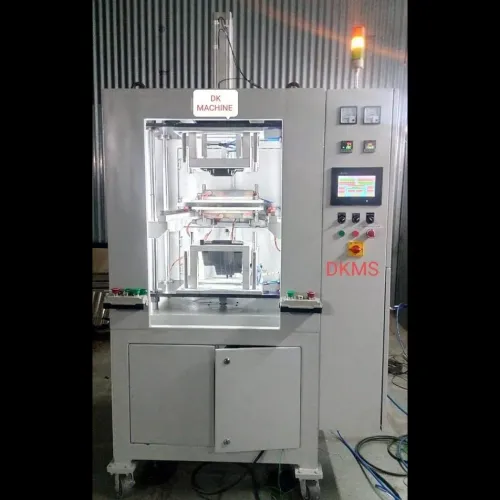
Precision Plastic Joining Solutions for Automotive Production
Automotive component manufacturers need reliable assembly processes that deliver consistent joint quality, accurate component positioning, and repeatable production results. As vehicle manufacturers increasingly use thermoplastic components in interiors, electrical systems, lighting assemblies, and other applications, selecting the right plastic joining technology becomes an important part of production planning.
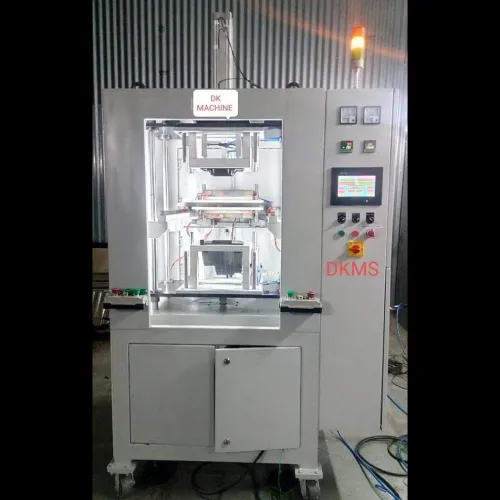
DK Machine Service provides ultrasonic plastic welding machinery and customized tooling solutions for manufacturers assembling compatible thermoplastic components. Our solutions can be evaluated for production environments requiring controlled welding operations, efficient assembly workflows, and application-specific machine configurations.
Whether you manufacture injection-moulded automotive parts, electrical housings, plastic covers, ventilation components, or interior assemblies, the right ultrasonic welding setup starts with understanding your component design, material specifications, and production requirements.
What Is an Ultrasonic Plastic Welding Machine for Automotive Components?
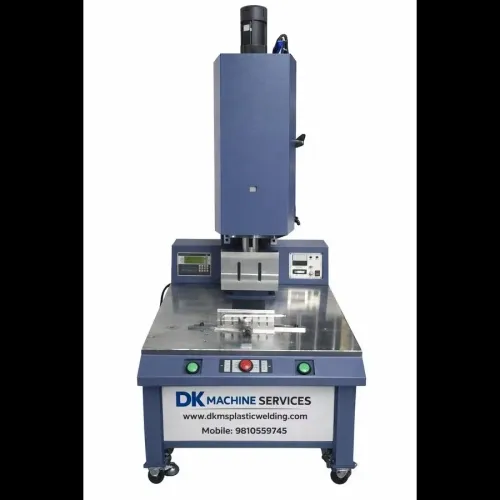
An ultrasonic plastic welding machine joins compatible thermoplastic components using high-frequency mechanical vibrations. These vibrations generate localized heat at the joint interface, allowing the material to soften and form a bond under controlled pressure.
After the ultrasonic energy stops, the joint cools and solidifies. The resulting assembly depends on the material grade, component geometry, joint design, welding parameters, and tooling configuration.
For automotive component manufacturers, ultrasonic welding can be a practical alternative to certain adhesive-based or mechanical fastening processes. Its suitability should be evaluated for the specific component and its required performance characteristics.
Automotive Components Suitable for Ultrasonic Plastic Welding
Automotive Interior Components
Plastic interior assemblies may include selected dashboard parts, console components, trim assemblies, panel housings, and other injection-moulded parts. Ultrasonic welding can be considered where the component material and joint geometry support this joining method.
Automotive Electrical and Electronic Housings
Vehicle electrical systems contain numerous plastic housings and enclosures used to protect or position electrical and electronic components. Suitable assemblies may include connector housings, switch bodies, sensor covers, and selected control-unit enclosures.
The welding process must be selected according to the component's design, sealing requirements, and intended operating environment.
Automotive Lighting Components
Selected plastic components used in vehicle lighting assemblies may be suitable for ultrasonic welding. However, applications involving optical surfaces, environmental sealing, or strict dimensional tolerances require careful assessment of the joining method and fixture design.
Airflow and Ventilation Components
Certain thermoplastic ducts, air-distribution parts, covers, and ventilation assemblies may be suitable for ultrasonic joining. The machine and tooling should be configured according to the part dimensions, joint location, and production requirements.
Automotive Brackets, Covers and Plastic Subassemblies
Manufacturers producing compatible plastic brackets, mounting components, protective covers, and multi-part assemblies may benefit from evaluating ultrasonic welding for repetitive joining operations.
Not every automotive plastic component is suitable for this process. Material compatibility and joint design should be confirmed before production implementation.
Why Automotive Manufacturers Consider Ultrasonic Welding
Controlled and Repeatable Assembly
A properly configured ultrasonic welding system can control key process parameters, helping manufacturers achieve repeatable results across production cycles. Digital control options may be useful where applications require defined welding settings and process monitoring.
Reduced Dependence on Adhesives
Ultrasonic welding can join compatible thermoplastic parts without conventional adhesives at the weld interface. This may simplify selected assembly operations by reducing adhesive application and curing steps.
Localized Heat Generation
The process concentrates heat around the intended joint area rather than heating the entire component. This can be advantageous for suitable applications where localized joining is preferred.
Potential for Production Automation
Ultrasonic welding equipment can be evaluated for integration into semi-automatic or automated assembly workflows. The appropriate arrangement depends on component handling, fixture design, required cycle time, and the level of process control needed.
Application-Specific Tooling
Custom ultrasonic horns and fixtures can be designed around component geometry and weld locations. Proper tooling helps position parts accurately and transfer energy to the intended joining area.
Actual production performance, cycle time, joint strength, and reject rates depend on the application and must be validated through testing.
How to Select the Right Machine for Automotive Plastic Parts
Choosing a machine based only on its power rating can lead to an unsuitable equipment selection. Automotive manufacturers should evaluate several factors before requesting a quotation.
Plastic material and grade: Identify the exact thermoplastic materials being joined, including relevant grades, fillers, and additives. Different materials may respond differently to ultrasonic energy.
Component dimensions and geometry: The part's size, wall thickness, shape, and accessibility of the joint influence machine configuration and tooling requirements.
Joint design and strength requirements: The intended weld interface, required mechanical performance, appearance, and any sealing requirements should be reviewed before selecting the process.
Production volume: Estimate the number of components required per shift or day. This helps determine the appropriate machine arrangement, loading method, and automation level.
Welding controls: Depending on the application, the required controls may include welding time, energy, amplitude, pressure, and other relevant parameters. The available controls should be confirmed for the selected machine model.
Fixture and horn requirements: The horn transfers ultrasonic energy to the component, while the fixture supports and locates the parts. Both should be designed for the actual component and weld configuration.
Customized Ultrasonic Welding Machines for Automotive Applications
Standard machinery may not meet every automotive assembly requirement. Components with complex shapes, multiple welding locations, restricted access, or specific positioning requirements may need customized tooling or a modified machine arrangement.
DK Machine Service offers ultrasonic plastic welding equipment and related components, including ultrasonic horns, transducers, boosters, and customized tooling solutions. The appropriate configuration can be discussed after reviewing the application details.
For a customized project, manufacturers should provide component drawings or samples, material specifications, the required joining locations, production targets, and any relevant quality requirements. This information helps establish whether ultrasonic welding is suitable and what equipment configuration should be evaluated.
Where necessary, application trials should be used to assess weld quality, component appearance, dimensional stability, and repeatability before moving to full-scale production.
Applications in Electric Vehicle and Automotive Electrical Manufacturing
Electric vehicles and conventional vehicles both use plastic components in electrical and electronic assemblies. Depending on the application, ultrasonic welding may be considered for compatible connector housings, protective enclosures, sensor components, and other thermoplastic parts.
Applications involving battery-related components require particular care. The actual component material, design, sealing needs, electrical safety requirements, and applicable validation procedures must be assessed before recommending a welding process.
Machine selection should be based on the specific component rather than assuming that one ultrasonic welding configuration is suitable for every automotive or electric vehicle application.
Why Choose DK Machine Service?
Choosing an industrial welding machine supplier involves assessing more than the equipment itself. Manufacturers should consider application suitability, tooling requirements, available machine configurations, technical documentation, and support arrangements.
DK Machine Service provides ultrasonic plastic welding machines and associated equipment for industrial component assembly. Our product range includes digital and analog ultrasonic welding systems, hand-gun machines, ultrasonic horns, transducers, boosters, and customized solutions.
We encourage automotive component manufacturers to share their actual application requirements so that the appropriate machinery and tooling can be evaluated before a purchasing decision is made.
Machine specifications, production capacity, customization scope, delivery timelines, warranty, and technical support should be confirmed in the quotation for the selected configuration.
Frequently Asked Questions
Which automotive components can be joined using ultrasonic plastic welding?
Potential applications include compatible plastic housings, interior assemblies, electrical enclosures, sensor covers, selected lighting components, ducts, brackets, and other thermoplastic parts. Suitability depends on the material, component design, and joint requirements.
Is ultrasonic plastic welding suitable for mass production?
It can be suitable for repetitive, high-volume production when the component, machine, tooling, and process parameters are properly matched. Actual cycle time and production output should be confirmed through application assessment.
Can the machine be customized for a particular automotive component?
Yes, customization of the horn, fixture, component positioning, and machine configuration may be possible depending on the application. Component drawings or samples help determine the appropriate setup.
Which plastics can be ultrasonically welded?
Various thermoplastics, including selected ABS, polypropylene, polycarbonate, and nylon grades, may be suitable. Weldability depends on the specific grades, additives, joint geometry, and process conditions.
How can manufacturers improve weld consistency?
Consistent results depend on suitable joint design, accurate component positioning, appropriate tooling, controlled welding parameters, and routine equipment maintenance. Production validation should establish acceptable process settings and quality checks.
What information is required for a quotation?
Provide the component drawing or sample, plastic material and grade, dimensions, welding location, expected production volume, required joint performance, and automation preferences. These details help the supplier evaluate a suitable machine configuration.
Request a Quotation for Automotive Plastic Welding Machinery
Looking for an ultrasonic plastic welding machine for your automotive component manufacturing facility?
Contact DK Machine Service to discuss your component assembly requirements. Share your product drawings, material specifications, production targets, and welding objectives so the appropriate machine configuration and tooling requirements can be evaluated.
Request a quotation from DK Machine Service to explore an ultrasonic plastic welding solution tailored to your automotive manufacturing application.
SEO Metadata
Keywords