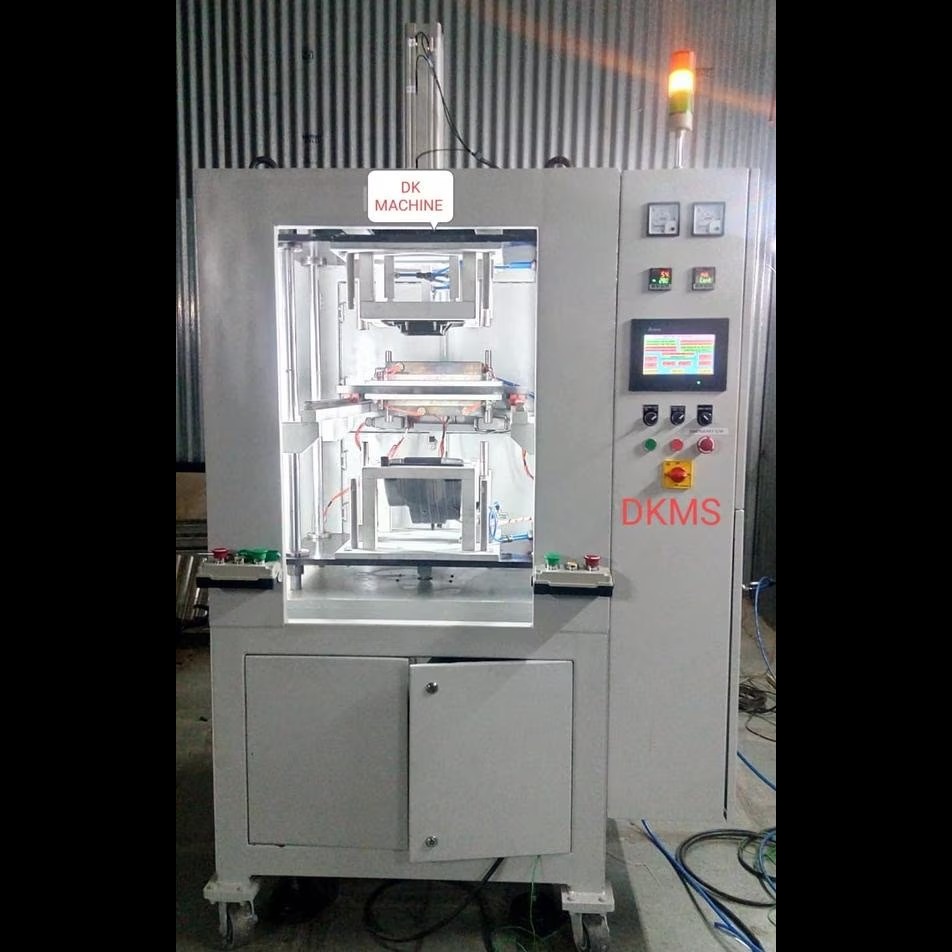
Selecting the right ultrasonic plastic welding machine is an important decision for manufacturers working with plastic components, industrial assemblies, electrical products, automotive parts, and consumer goods. The right machine should match the component design, plastic material, required joint strength, production volume, and manufacturing process.
A machine that performs well for one component may not deliver the same results for another. Differences in component thickness, joint geometry, material properties, and weld location can influence the selection of the welding system, ultrasonic horn, fixture, and operating parameters.
DK Machine Services, operating under the DKMS Plastic Welding brand in New Delhi, India, offers analog ultrasonic plastic welding machines, digital ultrasonic welding machines, hot-plate welding equipment, ultrasonic horns, and customized plastic welding solutions. Our application-focused approach helps manufacturers evaluate their requirements before selecting suitable equipment for their production operations.
1. Understand Your Plastic Welding Application
The first step in selecting an ultrasonic plastic welding machine is to understand exactly what you need to join. Manufacturers work with different component designs, from small electrical housings and plastic enclosures to automotive assemblies and industrial plastic products.
Identify the component dimensions, material type, wall thickness, joining area, and required weld strength. Determine whether you need to create a continuous joint, join specific points, assemble a housing, or seal a compatible plastic component.
For example, a manufacturer joining small electronic housings may require a different machine and horn configuration from a company assembling larger automotive plastic components. Understanding the application helps narrow down the appropriate machine capacity, frequency, tooling, and control requirements.
2. Check Plastic Material Compatibility
Ultrasonic welding is commonly used to join compatible thermoplastic components. However, not every plastic material or material combination behaves identically during the welding process.
Materials such as ABS, polypropylene, polycarbonate, and certain other thermoplastics may be suitable for ultrasonic welding, depending on the grade, component design, and application. Material compatibility, moisture content where relevant, fillers, additives, and surface conditions can influence the final result.
Before purchasing equipment, share the exact material specifications with your machine supplier. If two different plastics need to be joined, their compatibility should be assessed before selecting the welding method.
Conducting trials with actual components is a practical way to evaluate weld formation, strength, appearance, and repeatability before moving into commercial production.
3. Select the Appropriate Ultrasonic Welding Frequency
Ultrasonic welding machines are available in different frequency configurations, including 15 kHz, 20 kHz, and 35 kHz systems. The correct frequency depends on the component, tooling, material, required weld area, and production application.
A 15 kHz system may be considered for certain larger components or applications requiring a particular combination of amplitude and power. A 20 kHz machine is widely used for many general industrial plastic welding applications. Higher-frequency systems, such as 35 kHz, may be appropriate for selected smaller components and specialized applications.
These are general guidelines rather than fixed rules. Component geometry, acoustic design, horn configuration, and required weld performance must all be considered before deciding on the operating frequency.
Avoid selecting a machine based on frequency alone. Ask the manufacturer to assess the complete application and recommend a compatible welding system.
4. Choose Between Analog and Digital Ultrasonic Welding Machines
The choice between analog and digital ultrasonic plastic welding equipment depends on your production requirements, control preferences, and quality expectations.
Analog ultrasonic welding machines may be suitable for applications where straightforward controls and established operating settings meet production needs. They can be considered for manufacturers looking for a practical welding solution for compatible components.
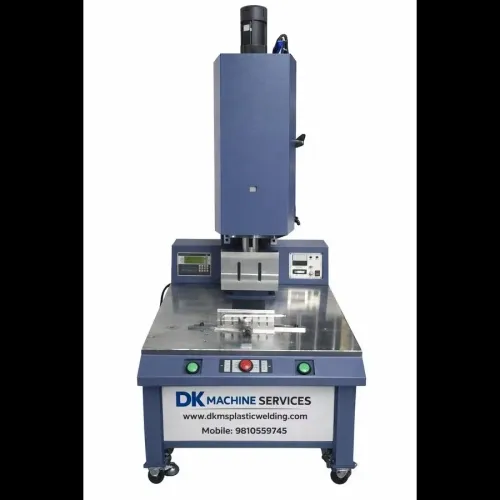
Digital ultrasonic welding machines offer electronic controls and configurable welding parameters. Depending on the model, these may include welding time, hold time, energy settings, amplitude adjustment, and automatic frequency tuning. Such features can help manufacturers establish and repeat suitable process conditions.
For production environments where consistency, parameter adjustment, and process monitoring are important, a digital system may be worth evaluating. However, the machine's actual capabilities vary by model, so buyers should confirm the available functions before purchasing.
DK Machine Services offers both analog and digital ultrasonic plastic welding machine configurations to support different industrial requirements.
5. Evaluate Machine Power and Welding Requirements
Machine power is another important consideration, but higher wattage does not automatically mean better welding performance.
The required power depends on the material, size of the weld area, component geometry, joint design, and desired production cycle. The system must provide suitable ultrasonic energy while maintaining appropriate contact and pressure throughout the welding process.
An underspecified machine may struggle with certain demanding applications, while selecting a higher-capacity machine without a technical requirement may increase investment unnecessarily.
Discuss the component and target production rate with the supplier to determine an appropriate machine configuration. Whenever possible, request application trials using your actual components before finalizing the specification.
6. Give Proper Attention to Ultrasonic Horns and Fixtures
The ultrasonic horn, also known as a sonotrode, transfers ultrasonic vibration to the plastic component. Its design and compatibility with the welding system are essential to the overall performance of the application.
A suitable horn should match the required contact area, component geometry, frequency, and acoustic characteristics of the system. The fixture must support and position the components correctly so that the intended welding area receives appropriate contact and energy transfer.
Poorly matched tooling can contribute to inconsistent welds, component deformation, uneven joining, or damage to the horn and other equipment.
DK Machine Services also offers ultrasonic horns, fixtures, and related components. For customized applications, discuss the component drawing, sample, weld location, and machine details with the supplier so the tooling requirements can be evaluated alongside the welding machine.
7. Consider Your Production Volume and Automation Needs
Your production target should influence the type of machine you choose. A business manufacturing limited quantities may have different requirements from a factory operating multiple shifts or producing large volumes of identical plastic components.
Consider your expected daily output, desired cycle time, operator availability, component loading method, and quality inspection process. Determine whether a standard machine is sufficient or whether a dedicated fixture, customized setup, or integration with an existing production line is necessary.
For repetitive manufacturing, suitable tooling and well-defined welding parameters can help establish a consistent process. Where higher levels of automation are required, evaluate the available machine controls and integration options with the manufacturer.
Selecting equipment around the actual production workflow can help avoid unnecessary manual handling and improve the suitability of the welding process for your factory.
8. Compare Ultrasonic Welding with Other Plastic Joining Methods
Ultrasonic welding is not the only method for joining plastic components. Depending on the product design, material, and joint requirements, manufacturers may also consider hot-plate welding or other suitable joining technologies.
Ultrasonic welding uses high-frequency mechanical vibrations to generate heat at the joining interface. It can be appropriate for compatible thermoplastic parts that require relatively fast joining cycles and repeatable assembly.
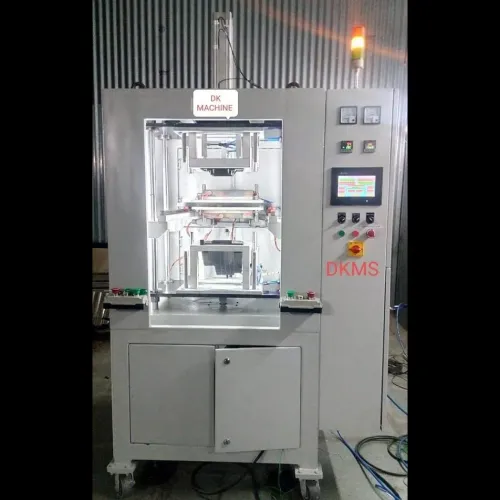
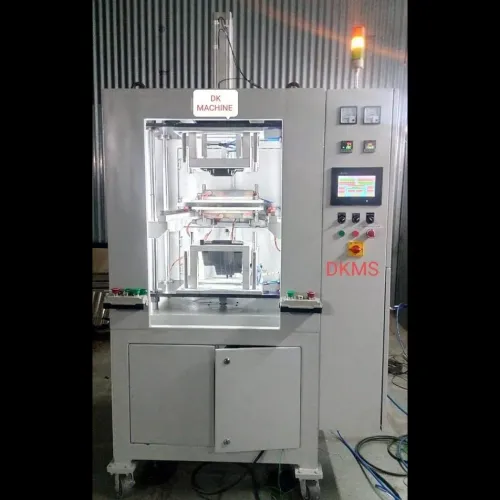
Hot-plate welding uses a heated tool to soften the joining surfaces before the components are brought together. It may be suitable for selected larger components, complex joint geometries, or applications where the joining process calls for contact heating.
The best method depends on the component design, material compatibility, weld dimensions, appearance requirements, and production objectives. DK Machine Services provides both ultrasonic and hot-plate plastic welding equipment, allowing manufacturers to discuss which approach may be appropriate for their application.
9. Review Maintenance, Safety, and After-Sales Support
Industrial welding machinery should be evaluated for more than its initial purchase price. Consider routine maintenance, access to spare parts, availability of technical assistance, operator training, and the supplier's ability to support the equipment after delivery.
Check the machine's electrical and utility requirements, safety provisions, operating instructions, and maintenance procedures. Ensure that operators understand correct setup, tooling installation, cleaning, and safe machine operation.
Before purchasing, clarify warranty coverage, installation arrangements, commissioning support, and the process for obtaining replacement components. These considerations are particularly important for manufacturers who rely on their welding equipment for regular production.
DK Machine Services emphasizes application-oriented machinery solutions and after-sales support to help customers evaluate their equipment requirements and plan for ongoing operation.
Why Choose DK Machine Services for Ultrasonic Plastic Welding Machines?
DK Machine Services, based in New Delhi, India, provides plastic welding machinery and related tooling for industrial manufacturing applications. Its product range includes analog ultrasonic welding machines, digital ultrasonic welding machines, hot-plate welding equipment, ultrasonic horns, transducers, and customized plastic welding solutions.
Rather than choosing machinery solely by price or wattage, manufacturers can begin by explaining the actual component and joining requirements. Important details include the plastic material, component dimensions, weld location, expected production quantity, required weld characteristics, and available factory utilities.
This information helps establish a clearer basis for evaluating machine frequency, power, control features, horn design, fixture requirements, and potential customization.
Whether you are setting up a new production process or upgrading an existing assembly operation, DK Machine Services can be approached to discuss suitable plastic welding equipment for your application.
Frequently Asked Questions
Which ultrasonic plastic welding machine is best for industrial use?
The best machine depends on the plastic material, component size, joint design, weld strength requirements, and production volume. Manufacturers should evaluate the complete application before selecting the frequency, power, controls, and tooling.
What is the difference between analog and digital ultrasonic welding machines?
Analog machines generally offer more straightforward operating controls, while digital machines may provide configurable welding parameters and additional control functions. The precise capabilities depend on the model and should be confirmed with the supplier.
Which ultrasonic welding frequency should I choose?
Common options include 15 kHz, 20 kHz, and 35 kHz. The correct frequency depends on component geometry, material, weld area, tooling, and production requirements. A sample trial can help determine a suitable configuration.
Can ultrasonic welding machines join different types of plastic?
Ultrasonic welding works with compatible thermoplastics. Joining performance depends on the specific material grades, material combination, component design, and process conditions. Compatibility should be evaluated before production.
Why is the ultrasonic horn important?
The horn transfers ultrasonic vibration to the component. Its design must be compatible with the machine and the intended weld area. Proper horn and fixture selection can help achieve more consistent welding conditions.
Can an ultrasonic plastic welding machine be customized?
Yes. Depending on the application, manufacturers may require customized horns, fixtures, component positioning arrangements, or machine configurations. The supplier should assess the component design and production requirements before recommending a solution.
What information is required to request a quotation?
Provide the plastic material, component drawing or sample, component dimensions, weld location, required production volume, desired cycle time, and any special joining or automation requirements. This information helps the supplier evaluate a suitable machine configuration.
Get the Right Ultrasonic Plastic Welding Solution for Your Industry
Choosing the right ultrasonic plastic welding machine begins with understanding your component, material, joining requirements, and production objectives. Evaluating machine frequency, power, control features, horn design, fixtures, and technical support can help you make a more informed investment.
DK Machine Services offers ultrasonic plastic welding machinery, hot-plate welding equipment, and related tooling for manufacturers across different industries.
Visit https://www.dkmsplasticwelding.com/ to explore the product range and contact the team to discuss your application. Share your component details and production requirements to begin evaluating a suitable plastic welding solution.
Keywords