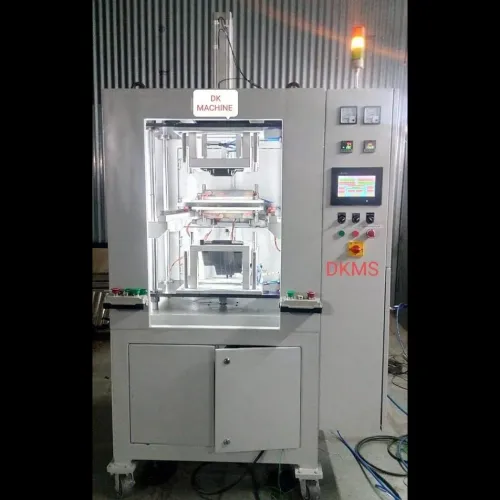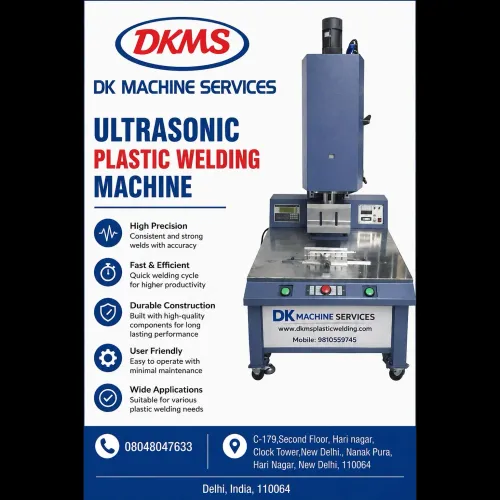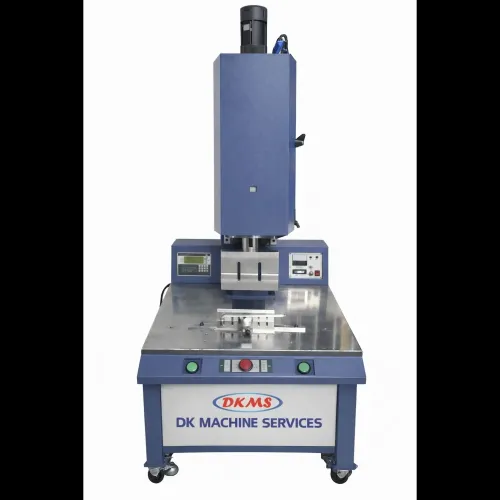

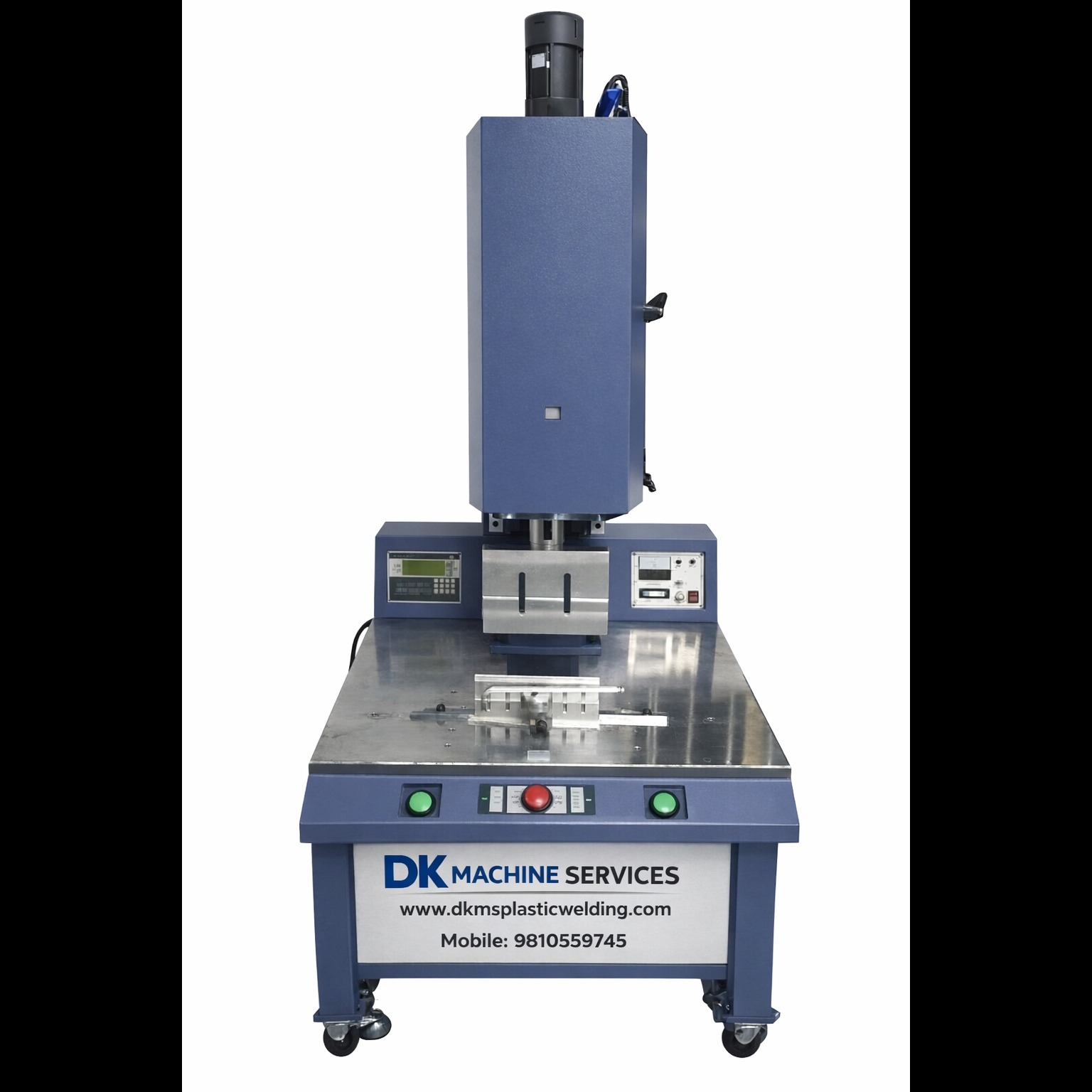
A Portable Ultrasonic Plastic Welding Machine is designed for manufacturers that need fast, clean, and reliable plastic joining without depending on a fixed production station. Its compact and flexible design makes it suitable for industrial assembly work where components may vary in size, shape, or location.
DK Machine Services manufactures and supplies ultrasonic plastic welding solutions for industrial applications where consistent weld quality, production efficiency, and easy operation are important. The machine uses high-frequency ultrasonic vibrations to generate localized heat at the joint, allowing compatible thermoplastic parts to bond without conventional adhesives, screws, or external heating.
What Is a Portable Ultrasonic Plastic Welding Machine?
A portable ultrasonic plastic welding machine is an industrial welding system that can be moved or operated at different assembly positions according to production requirements. Instead of requiring every component to be brought to a large stationary machine, the operator can use the portable setup for suitable welding applications.
The ultrasonic process converts electrical energy into high-frequency mechanical vibration. When the welding tool contacts the plastic components under controlled pressure, vibration at the joint produces localized heat. The material softens at the interface and forms a strong bond when the vibration stops and the joint cools.
This makes portable ultrasonic welding particularly useful for manufacturers looking for a repeatable joining method with short cycle times and minimal consumables.
How Does Portable Ultrasonic Plastic Welding Work?
The welding process begins by positioning the thermoplastic components correctly and bringing the ultrasonic horn into contact with the joint area. Controlled pressure is then applied while high-frequency vibrations travel through the horn to the welding interface.
The resulting friction and molecular movement generate localized heat at the contact point. The plastic softens only around the required welding zone, allowing the components to fuse together. After the ultrasonic energy stops, the joint is held under pressure for a short period to help achieve a stable weld.
Because the process concentrates energy at the joining area, there is generally no requirement to heat the complete component.
Why Choose Portable Ultrasonic Plastic Welding for Industrial Production?
Portable ultrasonic welding can provide manufacturers with a practical solution when flexibility is important. Operators can use the equipment for assemblies that are difficult to handle on a conventional fixed machine, provided the application is suitable for ultrasonic welding.
The process can also reduce dependency on adhesives and mechanical fasteners. This can simplify assembly operations while helping manufacturers maintain cleaner production processes.
Another advantage is the speed of ultrasonic welding. With appropriate material selection, tooling, pressure, amplitude, and welding parameters, many plastic components can be joined within a short production cycle.
Key Advantages of Portable Ultrasonic Welding
Flexible Industrial Operation
The portable configuration provides greater flexibility for production environments where components cannot easily be transported to a fixed welding station.
Fast Welding Cycles
Ultrasonic welding can complete suitable plastic joining operations rapidly, making it suitable for repetitive manufacturing applications.
Clean Joining Process
The process does not normally require liquid adhesives, solvents, or additional joining consumables. This can help maintain a cleaner assembly area.
Consistent Weld Quality
When the machine is correctly configured and the ultrasonic tooling is properly designed, manufacturers can achieve repeatable welding results across production batches.
Reduced Assembly Complexity
Ultrasonic welding can replace certain mechanical joining methods in suitable applications, potentially reducing the number of assembly steps.
Suitable for Thermoplastic Components
Portable ultrasonic welding is particularly useful for compatible thermoplastic materials where a reliable localized weld can be created.
Industrial Applications of Portable Ultrasonic Plastic Welding Machines
Portable ultrasonic welding machines can be considered for a wide range of plastic component assembly applications. These include automotive plastic parts, electrical housings, electronic components, consumer products, packaging components, medical-related plastic assemblies, household products, and injection-moulded components.
The exact suitability depends on the plastic material, component geometry, joint design, required weld strength, production volume, and accessibility of the welding area.
Materials Suitable for Ultrasonic Plastic Welding
Ultrasonic welding is primarily used with thermoplastic materials. Commonly processed materials can include ABS, polypropylene, polyethylene, polycarbonate, nylon and other engineering thermoplastics, depending on their formulation and the specific application.
Material compatibility should always be evaluated before selecting the welding method. Different plastics can behave differently during ultrasonic vibration, so testing and process validation are important for achieving the required weld performance.
Portable Ultrasonic Welding vs Conventional Plastic Joining
Traditional plastic assembly methods may involve screws, rivets, adhesives, solvents, or external heating. Portable ultrasonic welding offers an alternative approach by concentrating ultrasonic energy directly at the joint.
For suitable applications, this can reduce assembly time and eliminate some consumable materials. It can also provide a cleaner and more controlled joining process.
However, ultrasonic welding is not automatically suitable for every plastic component. Joint geometry, material compatibility, component size, welding accessibility, and required strength must be evaluated before choosing the technology.
How to Select the Right Portable Ultrasonic Welding Machine?
Choosing the right machine requires more than comparing machine specifications. Manufacturers should first evaluate the plastic material, component dimensions, joint design, required weld strength, production quantity, and expected cycle time.
The required ultrasonic frequency and power should then be selected according to the application. The horn and fixture also play an important role because they transfer and control ultrasonic energy at the welding area.
For customized industrial applications, manufacturers should discuss the component design and production requirements with an experienced plastic welding machine manufacturer before finalizing the equipment.
Why Choose DK Machine Services?
DK Machine Services provides industrial plastic welding solutions designed around different production requirements. The company works with ultrasonic welding technology, customized welding systems, ultrasonic horns, transducers and related components.
For manufacturers looking for a portable ultrasonic plastic welding machine in India, application-specific consultation can help determine the appropriate machine configuration, ultrasonic tooling and welding parameters.
The objective is not simply to supply a machine but to provide a practical welding solution that matches the customer's component and manufacturing process.
Frequently Asked Questions
What is a portable ultrasonic plastic welding machine?
It is a flexible ultrasonic welding system designed for joining compatible thermoplastic components where mobility or access to different assembly positions is important.
Can portable ultrasonic welding be used for industrial production?
Yes. It can be used for suitable repetitive industrial applications where the plastic material, joint design and component geometry support ultrasonic welding.
Which plastics can be welded using ultrasonic technology?
Various thermoplastics, including ABS, PP, PE, polycarbonate and nylon, can be considered depending on their specific grades and application requirements.
Does ultrasonic plastic welding require adhesive?
No. Ultrasonic welding can create a bond between suitable thermoplastic components without conventional adhesives.
How do I select the right ultrasonic welding machine?
The selection should consider plastic type, component size, joint design, required weld strength, production volume, welding accessibility, frequency, power and tooling requirements.
Can DK Machine Services provide customized ultrasonic welding solutions?
Yes. Customized machine and tooling configurations can be developed according to the component and production requirements.
Get the Right Portable Ultrasonic Welding Solution
If your manufacturing process requires a flexible solution for joining thermoplastic components, a Portable Ultrasonic Plastic Welding Machine can offer an efficient alternative to conventional assembly methods.
Contact DK Machine Services with your component details and application requirements to discuss the appropriate ultrasonic welding machine, horn, fixture and configuration for your production process.