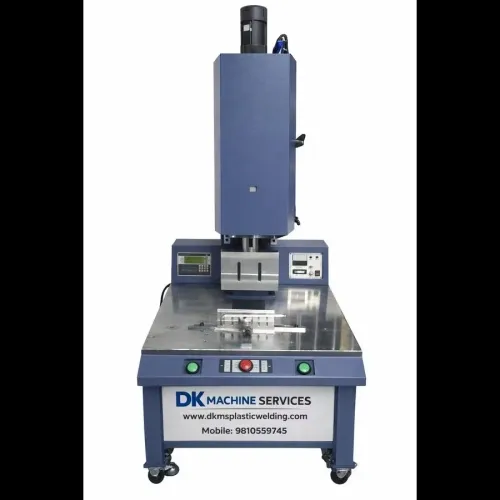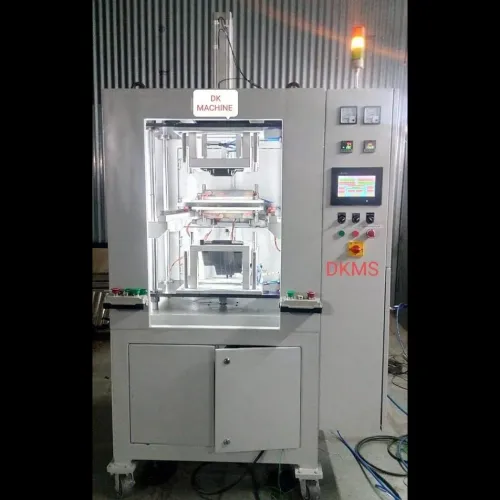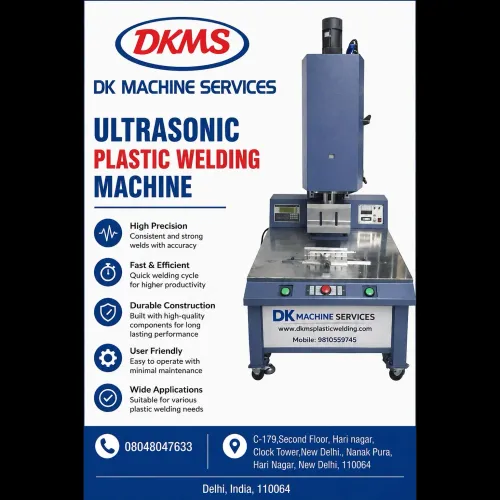
Choosing the right ultrasonic plastic welding machine is important for manufacturers who need strong, clean, and repeatable plastic joints. The ideal machine depends on factors such as the type of plastic, component design, welding frequency, production volume, joint requirements, and level of automation.
For manufacturers in automotive, electronics, medical devices, appliances, packaging, and consumer products, selecting the correct ultrasonic welding system can improve production consistency while reducing the need for adhesives, screws, and additional joining processes.
What Is an Ultrasonic Plastic Welding Machine?
An ultrasonic plastic welding machine uses high-frequency mechanical vibrations to join compatible thermoplastic components. The ultrasonic energy generates localized heat at the joint interface, allowing the plastic surfaces to melt and fuse under controlled pressure.
Unlike conventional joining methods, ultrasonic welding can create fast and repeatable joints without requiring glue, solvents, or external heating elements. This makes it suitable for high-volume manufacturing where speed, cleanliness, and consistency are important.
What Factors Should You Consider Before Choosing a Machine?
The first consideration is the type of plastic material being welded. Ultrasonic welding works particularly well with compatible thermoplastics, but different materials require different welding parameters. Material composition, melting characteristics, component thickness, and joint geometry can all influence welding performance.
The size and design of the component are also important. Larger components or parts with complex geometries may require a different horn design, welding configuration, or machine capacity compared with small plastic components.
Another important factor is production volume. Manufacturers producing thousands of components every day may benefit from an automated ultrasonic welding system with programmable controls and repeatable operating parameters. For smaller production requirements, a semi-automatic or manually operated system may be more appropriate.
Why Is Welding Frequency Important?
Ultrasonic welding machines are available with different operating frequencies, commonly including 15 kHz, 20 kHz, 30 kHz, 35 kHz and 40 kHz configurations depending on the application.
Lower frequencies are generally considered for applications requiring higher amplitude and greater welding power, while higher frequencies can be suitable for smaller or more delicate components. The correct frequency should be selected according to the material, component size, joint design, and required welding result.
A professional machine manufacturer can help determine the appropriate frequency after evaluating the application and component requirements.
How Does Component Design Affect Machine Selection?
Ultrasonic welding performance depends heavily on the joint design. Features such as energy directors, welding ribs, joint clearance, wall thickness, and contact surfaces can influence how efficiently ultrasonic energy reaches the welding area.
If the component has not been designed specifically for ultrasonic welding, simply increasing machine power may not solve the problem. In many cases, optimizing the component design and tooling provides better welding results.
How Do You Select the Correct Ultrasonic Welding Power?
Machine power should not be selected based only on the size of the machine. The required power depends on material type, component size, weld area, cycle time, joint design, and production requirements.
Selecting a machine with insufficient capacity can result in inconsistent welding, while choosing an unnecessarily powerful system can increase investment costs without providing meaningful benefits.
The right approach is to evaluate the actual application and select the welding system according to the required process parameters.
Why Is Ultrasonic Horn Design Important?
The ultrasonic horn, also called a sonotrode, transfers ultrasonic vibration to the plastic component. Its design must match the shape, dimensions, and welding area of the component.
A properly designed horn helps distribute ultrasonic energy effectively across the intended welding area. Poor tooling design can lead to weak joints, uneven welding, component damage, or inconsistent production.
For customized plastic components, manufacturers should work with an ultrasonic welding machine supplier capable of developing application-specific tooling.
Should You Choose a Manual, Semi-Automatic, or Automatic Machine?
The right level of automation depends on production requirements.
A manual ultrasonic welding machine can be suitable for low-volume production, prototyping, repair operations, and applications where operator flexibility is important.
A semi-automatic system can provide greater production consistency while still allowing operator involvement during component loading and unloading.
An automatic ultrasonic plastic welding machine is generally more suitable for high-volume manufacturing where repeatability, cycle time, and integration with production lines are major priorities.
What Industries Use Ultrasonic Plastic Welding?
Ultrasonic plastic welding is widely used for joining thermoplastic components in automotive parts, electrical and electronic products, medical devices, household appliances, packaging products, consumer goods, industrial components, and other plastic assemblies.
The technology is particularly useful where manufacturers need clean welds, short cycle times, repeatable results, and reduced dependence on mechanical fasteners or adhesives.
How Can the Right Machine Improve Production?
Selecting the correct ultrasonic plastic welding machine can help manufacturers achieve more consistent weld quality and shorter production cycles. It can also reduce material consumption associated with adhesives, screws, and other joining components.
When the machine, tooling, material, and component design are correctly matched, ultrasonic welding can become a highly repeatable manufacturing process suitable for large-scale production.
Why Choose DK Machine Services for Ultrasonic Plastic Welding Machines?
DK Machine Services provides ultrasonic plastic welding solutions for manufacturers looking for reliable and application-oriented plastic joining equipment. The machine selection process can be based on the component material, product dimensions, welding requirements, production volume, and desired level of automation.
For manufacturers with customized components, discussing the application before purchasing the machine can help determine the appropriate ultrasonic frequency, power configuration, tooling, and operating parameters.
Frequently Asked Questions
Which ultrasonic plastic welding machine is best for my product?
The best machine depends on the plastic material, component dimensions, weld area, joint design, production quantity, cycle time, and required weld strength. Application evaluation is recommended before selecting the machine.
What frequency is commonly used for ultrasonic plastic welding?
Common frequencies include 15 kHz, 20 kHz, 30 kHz, 35 kHz, and 40 kHz. The appropriate frequency depends on the component and welding application.
Can ultrasonic welding be used for automotive plastic parts?
Yes. Ultrasonic welding can be used for various thermoplastic automotive components where controlled and repeatable plastic joining is required.
Does ultrasonic plastic welding require adhesive?
No. Ultrasonic welding joins compatible thermoplastic materials using high-frequency mechanical vibration and normally does not require conventional adhesives.
Can ultrasonic welding machines be customized?
Yes. Machine configurations and ultrasonic tooling can be developed according to specific component dimensions, material characteristics, welding requirements, and production processes.
How do I select an ultrasonic welding machine for high-volume production?
For high-volume production, evaluate cycle time, automation requirements, machine capacity, tooling durability, process control, component handling, and repeatability before making the final selection.
Get the Right Ultrasonic Plastic Welding Solution
Choosing an ultrasonic plastic welding machine should be based on the complete application rather than machine power or price alone. Material compatibility, component design, welding frequency, tooling, production volume, automation, and required weld quality should all be considered before investment.
If you are looking for an ultrasonic plastic welding machine manufacturer in India, share your component details, plastic material, expected production volume, and welding requirements with DK Machine Services to identify a suitable welding solution.
Ultrasonic Plastic Welding Machine
Ultrasonic Plastic Welding Machine Manufacturer, Plastic Welding Machine Manufacturer in India, Ultrasonic Plastic Welding Equipment, Ultrasonic Welding Machine for Plastic Components, Industrial Ultrasonic Welding Machine, Automatic Ultrasonic Plastic Welding Machine
What is an ultrasonic plastic welding machine? How do I choose an ultrasonic plastic welding machine? Which ultrasonic frequency is best for plastic welding? What factors affect ultrasonic plastic welding? Can ultrasonic welding be used for automotive plastic parts? How do I select an ultrasonic welding machine for high-volume production?
Delhi
08048047633
+919810559745
 Chat with us
 Chat with us