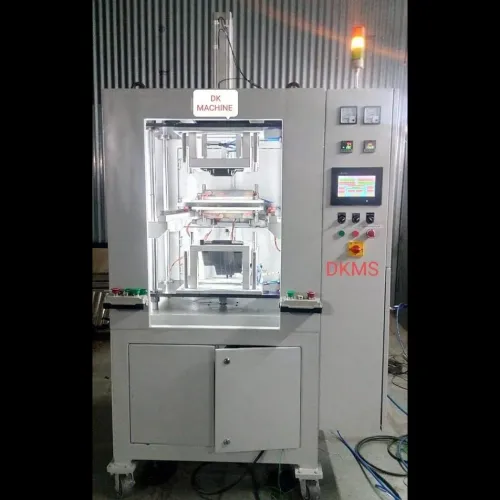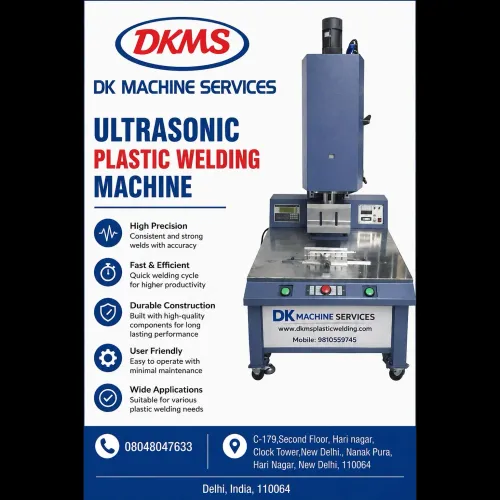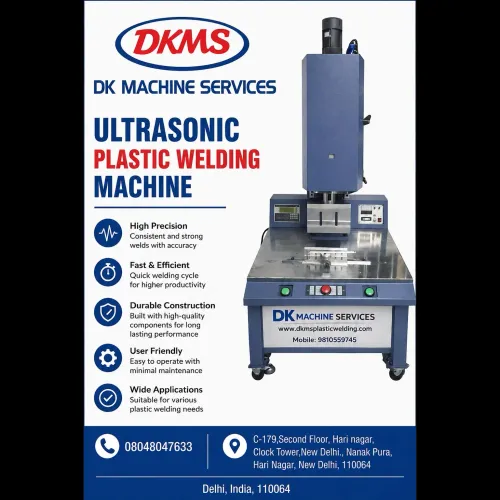


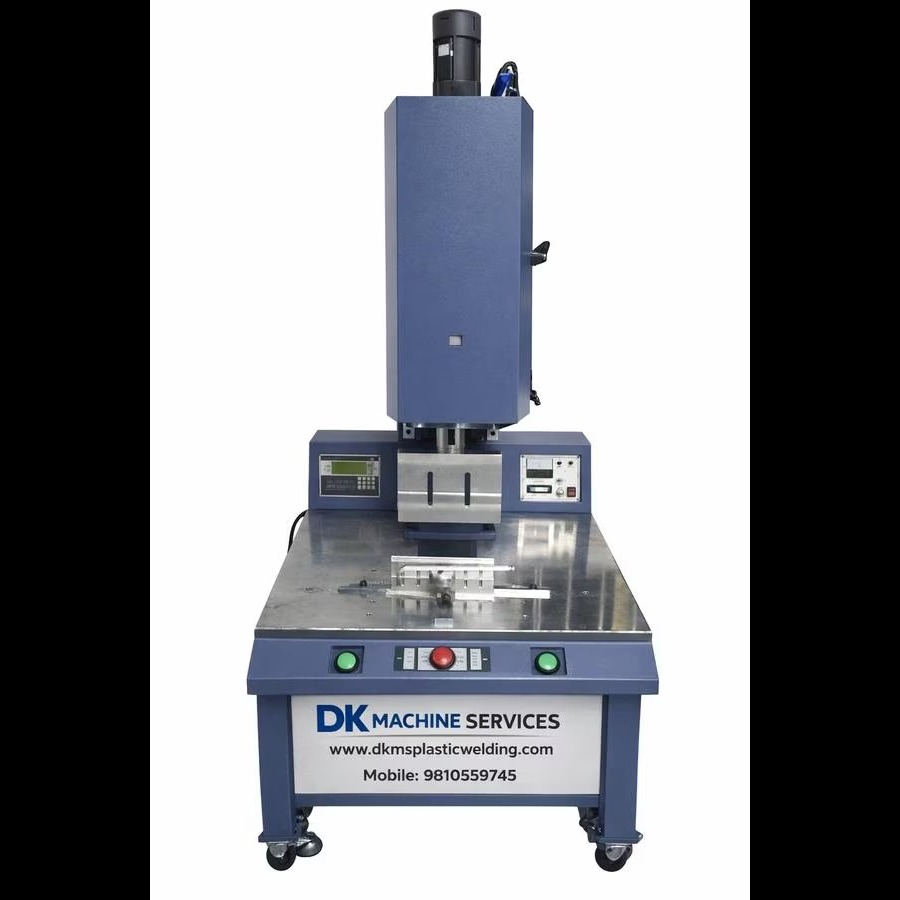
Manufacturers looking for a reliable plastic joining solution often search for terms such as how an ultrasonic plastic welding machine works, ultrasonic plastic welding process, ultrasonic welding machine for plastic components, ultrasonic welding equipment manufacturer, and ultrasonic welding machine for industrial production. Understanding the working principle helps production teams select the right equipment and determine whether ultrasonic welding is suitable for their components.
What Is an Ultrasonic Plastic Welding Machine?
An ultrasonic plastic welding machine is an industrial joining system designed to bond compatible thermoplastic components without using conventional adhesives, screws, or external heating elements. The machine uses high-frequency mechanical vibrations to generate localized heat at the joint between plastic parts. This heat softens the thermoplastic material at the interface, allowing the components to fuse together under controlled pressure.
The process is fast, repeatable, and suitable for many applications where manufacturers require consistent joints and efficient production cycles.
How Does Ultrasonic Plastic Welding Work?
The ultrasonic welding process begins when the plastic components are accurately positioned in a fixture. The machine then applies controlled pressure through the welding horn, also known as a sonotrode.
Electrical energy is converted into high-frequency mechanical vibration by the ultrasonic transducer. A booster can then modify the vibration characteristics before the energy reaches the horn.
The horn transfers the ultrasonic vibrations to the plastic components. At the joint interface, molecular and mechanical friction generates localized heat. The thermoplastic material softens or melts at the designed welding area.
While the material is in its softened state, the machine maintains pressure so that the two components bond together. After the ultrasonic energy stops, the material cools and solidifies while pressure is maintained for a controlled hold period. The result is a strong and repeatable plastic joint.
Main Components of an Ultrasonic Welding Machine
An industrial ultrasonic plastic welding system typically includes an ultrasonic generator, transducer, booster, welding horn, pneumatic or servo-driven actuator, tooling or fixture, and machine control system.
The ultrasonic generator converts electrical power into the electrical signal required by the ultrasonic system. The transducer converts this electrical energy into mechanical vibration. The booster can increase or decrease vibration amplitude according to the application requirements.
The welding horn transfers the ultrasonic vibration directly to the plastic component. Its geometry is particularly important because the horn must match the component and welding area correctly.
The fixture holds the parts in the correct position during welding, while the machine controls parameters such as welding time, pressure, amplitude, energy, and hold time depending on the machine configuration.
What Happens During One Welding Cycle?
A typical ultrasonic welding cycle starts with loading and positioning the plastic components in the fixture. The machine then brings the horn into contact with the upper component and applies the required force.
Ultrasonic vibration is introduced for a controlled period. The resulting localized heat softens the thermoplastic material at the joint. Once the programmed welding conditions are reached, ultrasonic energy stops and the horn continues applying pressure during the hold phase.
The welded component is then released and removed from the fixture. Because the cycle can be completed rapidly, ultrasonic welding can be integrated into automated and high-volume manufacturing processes.
Which Plastics Can Be Ultrasonically Welded?
Ultrasonic welding is primarily used with thermoplastic materials. Common materials used in suitable applications include ABS, polypropylene (PP), polyethylene (PE), polycarbonate (PC), nylon/PA, polystyrene (PS), and certain other thermoplastic grades.
However, material selection alone does not determine weldability. The component's geometry, material compatibility, joint design, wall thickness, additives, moisture content, and required joint strength can all influence the welding result.
Manufacturers should therefore evaluate the actual component and material grade before selecting machine parameters.
What Factors Affect Ultrasonic Welding Quality?
Several factors influence the quality and consistency of an ultrasonic plastic weld. The welding frequency, vibration amplitude, applied pressure, welding time, hold time, component design, material properties, horn geometry, and fixture alignment all need to work together.
Joint design is especially important. Features such as an energy director can concentrate ultrasonic energy at the intended welding interface and improve process consistency.
Poor alignment, unsuitable tooling, excessive energy, insufficient pressure, incompatible materials, or incorrect welding parameters can result in weak joints, flash, deformation, cracks, or surface marks.
Why Do Manufacturers Use Ultrasonic Plastic Welding?
Ultrasonic welding can provide fast joining cycles with controlled and repeatable results. Because the heat is generated primarily at the welding interface, the process can reduce the need to heat the entire component.
The method can also eliminate or reduce the use of adhesives and mechanical fasteners in suitable applications. This can simplify assembly and make the process easier to integrate into automated production lines.
For manufacturers producing large quantities of plastic components, repeatability and cycle-time control are important advantages when the component and material are appropriate for ultrasonic welding.
Where Is Ultrasonic Plastic Welding Used?
Ultrasonic welding is used across several manufacturing sectors. Applications can include automotive plastic components, electrical and electronic housings, consumer products, packaging components, medical and healthcare products, appliances, toys, and other thermoplastic assemblies.
The exact application depends on the material, component geometry, joint requirements, production volume, and required weld strength.
How to Choose the Right Ultrasonic Welding Machine?
Selecting an ultrasonic welding machine should begin with the component rather than simply choosing a machine based on power rating. Manufacturers should consider the plastic material, component dimensions, joint design, required weld strength, production quantity, cycle time, automation requirements, and available installation space.
The required ultrasonic frequency and power should then be determined based on the application. The welding horn and fixture should also be designed specifically for the component wherever necessary.
For complex or high-volume applications, manufacturers can discuss component drawings, material specifications, sample parts, and production requirements with an experienced ultrasonic welding machine manufacturer before finalizing the equipment.
Frequently Asked Questions
How long does ultrasonic plastic welding take?
The welding cycle can be very short, but the actual time depends on the material, component design, welding parameters, machine configuration, and required joint strength.
Is ultrasonic welding suitable for mass production?
Yes. Ultrasonic welding can be suitable for high-volume production because the process can provide repeatable cycles and can be integrated with automated assembly systems.
Does ultrasonic welding require adhesive?
No. Ultrasonic welding joins suitable thermoplastic components through localized heat generated by high-frequency mechanical vibration, so adhesives are generally not required for the welding process.
What is an ultrasonic welding horn?
An ultrasonic horn, or sonotrode, is the tooling component that transfers ultrasonic vibration to the plastic parts. Its shape and dimensions are designed according to the application and welding area.
Can ultrasonic welding be used for automotive components?
Yes. Ultrasonic welding is used for various automotive plastic components where the materials, geometry, and joint requirements are suitable for the process.
Choosing an Ultrasonic Welding Machine Manufacturer
For manufacturers planning to introduce ultrasonic plastic welding into their production process, the machine is only one part of the solution. Proper horn design, fixture development, parameter selection, component compatibility, testing, and technical support can all influence the final welding performance.
DK Machine Services provides ultrasonic plastic welding solutions for industrial applications and can help manufacturers evaluate their component requirements and select an appropriate welding configuration.
Conclusion
An ultrasonic plastic welding machine works by converting electrical energy into high-frequency mechanical vibration and transferring that vibration through a welding horn to the plastic joint. The resulting localized heat softens compatible thermoplastic materials, and controlled pressure allows the components to fuse and solidify into a finished joint.
For manufacturers, understanding the complete process—from material selection and joint design to horn configuration and machine parameters—is essential for achieving reliable welding performance. A properly selected ultrasonic welding system can become an efficient joining solution for repeatable plastic component assembly.
Looking for an ultrasonic plastic welding machine for your manufacturing application? Share your component details, plastic material, production requirement, and welding objective with DK Machine Services to discuss a suitable solution.