
Ultrasonic welding has become an effective joining technology for manufacturers assembling plastic components quickly, consistently and without conventional adhesives. In many applications, it can reduce or even eliminate the need for screws, rivets, solvents and adhesive bonding. However, whether ultrasonic welding can completely replace another joining method depends on the plastic material, component geometry, joint design, required weld strength and production requirements.
For manufacturers looking to improve plastic assembly, ultrasonic welding offers a clean and highly repeatable alternative when the components are designed appropriately for the process.
How Does Ultrasonic Welding Join Plastic Components?
Ultrasonic plastic welding uses high-frequency mechanical vibrations to generate heat at the joint between compatible thermoplastic components. The controlled energy softens the plastic at the joining interface, allowing the parts to bond under pressure.
Unlike adhesive bonding, the process does not require a separate bonding material. Once the welding cycle is completed and the joint has cooled sufficiently, the components form an integrated plastic assembly.
This makes ultrasonic welding particularly useful for production environments where speed, repeatability and clean assembly are important.
Can Ultrasonic Welding Replace Adhesives?
In many thermoplastic applications, ultrasonic welding can replace adhesives when the materials and joint design are suitable.
Adhesive assembly may require additional materials, application equipment, curing time and handling processes. Ultrasonic welding can combine the components directly through a controlled welding cycle, potentially simplifying production.
It can be particularly attractive where manufacturers want to avoid adhesive residue, curing processes or the recurring cost of bonding materials.
However, adhesives still have advantages in applications involving dissimilar materials, large bonding surfaces, unusual geometries or requirements that are not suitable for ultrasonic welding. The correct joining technology should therefore be selected based on the product and production requirements.
Can Ultrasonic Welding Replace Screws and Rivets?
Ultrasonic welding can also replace certain mechanical fasteners in plastic assemblies.
Screws and rivets can require additional components, holes, assembly steps and manual or automated fastening operations. Ultrasonic welding can create the joint directly between compatible plastic components, reducing the number of separate parts in some product designs.
For high-volume production, eliminating a separate fastener can potentially simplify assembly and improve cycle efficiency.
However, mechanical fastening remains appropriate for applications requiring frequent disassembly, joining incompatible materials or accommodating specific mechanical loads. Ultrasonic welding should therefore be evaluated against the functional requirements of the finished product.
What Are the Advantages of Ultrasonic Welding?
One of the biggest advantages is speed. A properly configured ultrasonic welding process can complete a joining cycle rapidly, making it suitable for repetitive manufacturing operations.
The process can also provide consistent results when the machine parameters, tooling and component design are correctly controlled. Because no adhesive is required, manufacturers can reduce dependency on consumable bonding materials.
Ultrasonic welding can also produce a clean assembly process with limited material handling. For automated manufacturing environments, this can make ultrasonic welding an attractive option for improving production efficiency.
When Is Ultrasonic Welding a Better Choice Than Adhesives?
Ultrasonic welding can be particularly suitable when the product consists of compatible thermoplastic components and requires fast, repeatable assembly.
It can be considered when manufacturers want to reduce adhesive consumption, eliminate curing time, simplify production or achieve consistent weld cycles across large production volumes.
The suitability depends heavily on the plastic material and joint design. A technical evaluation should be performed before changing an established assembly process.
When Is Mechanical Fastening Still Better?
Ultrasonic welding is not a universal replacement for screws, rivets or other mechanical fastening methods.
Mechanical fasteners may be preferable when components need to be repeatedly opened or serviced, when different materials need to be joined, or when the product design requires a removable connection.
For this reason, manufacturers should compare the complete requirements of the assembly rather than selecting a joining technology based only on production speed.
Which Plastics Can Be Ultrasonically Welded?
Ultrasonic welding is primarily used for thermoplastic materials. The weldability of a specific plastic depends on factors such as material compatibility, melting behaviour, component geometry and joint design.
Materials with suitable thermoplastic characteristics can often be evaluated for ultrasonic joining, but the same welding settings cannot necessarily be applied to every plastic.
Before selecting a machine, manufacturers should provide information about the material, component dimensions, joint configuration, production quantity and required weld performance.
Why Joint Design Matters
Even a high-quality ultrasonic welding machine cannot compensate for an unsuitable component design.
Energy directors, welding surfaces, joint dimensions, component tolerances and material selection can all influence the quality of the finished weld. Proper tooling is also essential because the ultrasonic horn must transfer energy to the intended welding area efficiently.
For new products, involving the welding machine manufacturer during the design stage can help identify potential manufacturing challenges before mass production begins.
Ultrasonic Welding vs Adhesive vs Mechanical Fastening
Ultrasonic welding is generally most attractive when manufacturers need a fast and repeatable joining process for compatible thermoplastic parts.
Adhesives can provide flexibility for certain materials and larger bonding surfaces but may involve consumables and curing considerations. Mechanical fasteners can provide strong and serviceable connections but may increase part count and assembly operations.
The best choice depends on the product's material, strength requirements, production volume, design, serviceability and total assembly cost.
How DK Machine Services Can Help
Selecting the right ultrasonic welding system requires more than choosing a machine based on power rating. The welding equipment, frequency, horn, fixture and process parameters should be matched to the component being assembled.
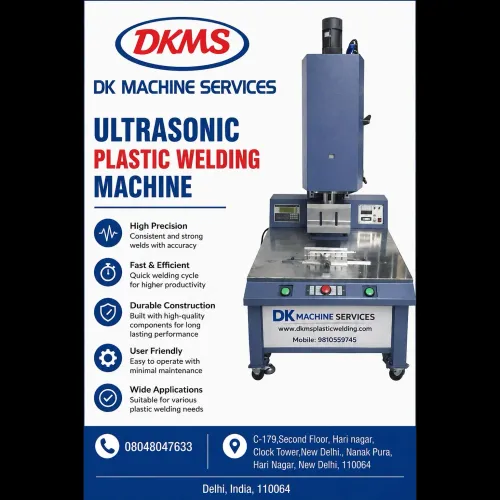
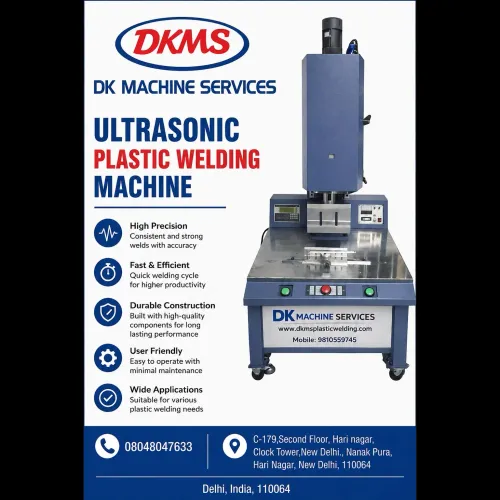
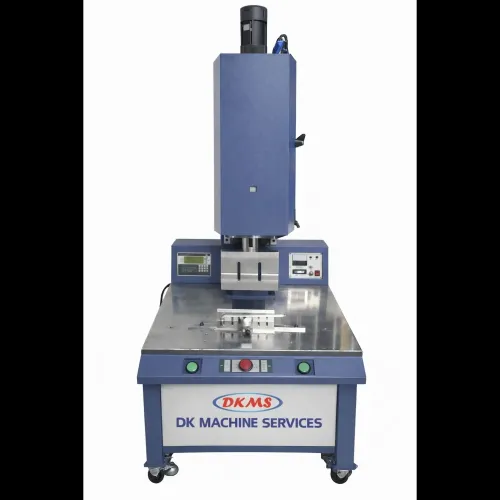
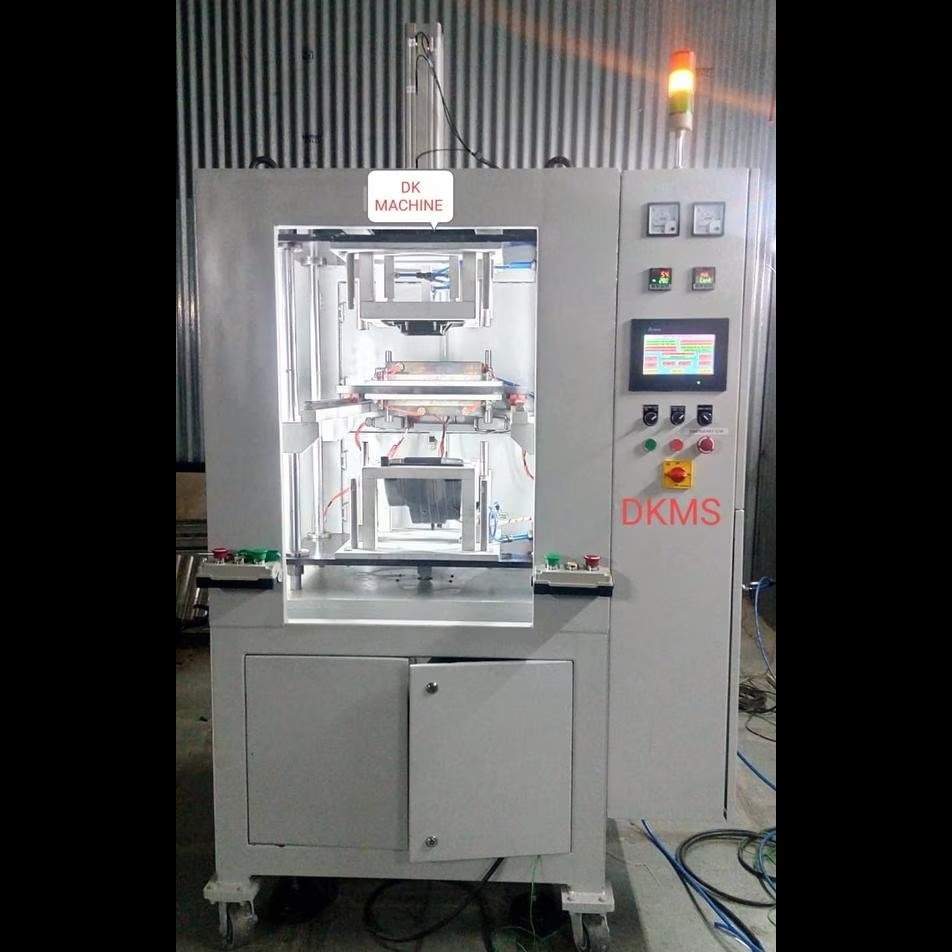
DK Machine Services provides ultrasonic plastic welding solutions, including digital ultrasonic welding machines, ultrasonic horns, transducers, boosters and customized welding solutions. This enables manufacturers to develop a welding setup around their specific plastic component and production requirements.
Frequently Asked Questions
Can ultrasonic welding completely replace adhesives?
Not in every application. Ultrasonic welding can replace adhesives for many compatible thermoplastic assemblies, but material compatibility, joint design and product requirements must first be evaluated.
Can ultrasonic welding replace screws in plastic products?
It can replace screws in certain permanent plastic assemblies where the materials and joint design are suitable. If the product needs frequent disassembly, screws may remain the better option.
Is ultrasonic welding faster than adhesive bonding?
It can be significantly faster in suitable high-volume applications because ultrasonic welding does not require a conventional adhesive curing stage. Actual cycle time depends on the component, material, machine and welding parameters.
Does ultrasonic welding require glue?
No. Ultrasonic plastic welding joins compatible thermoplastic components through controlled mechanical vibration and pressure rather than conventional adhesive.
What should I consider before switching to ultrasonic welding?
Manufacturers should evaluate the plastic material, component geometry, joint design, required weld strength, production volume, cycle time and tooling requirements before switching from adhesive or mechanical fastening.