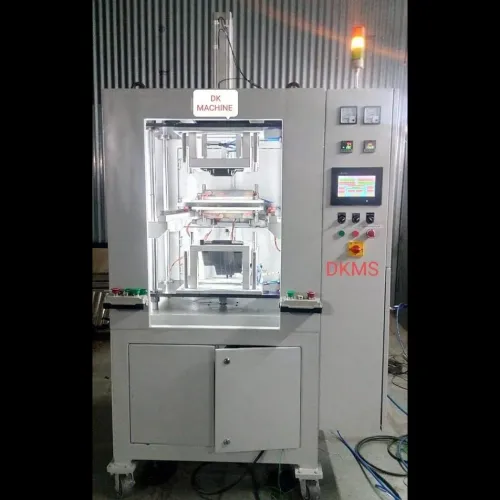
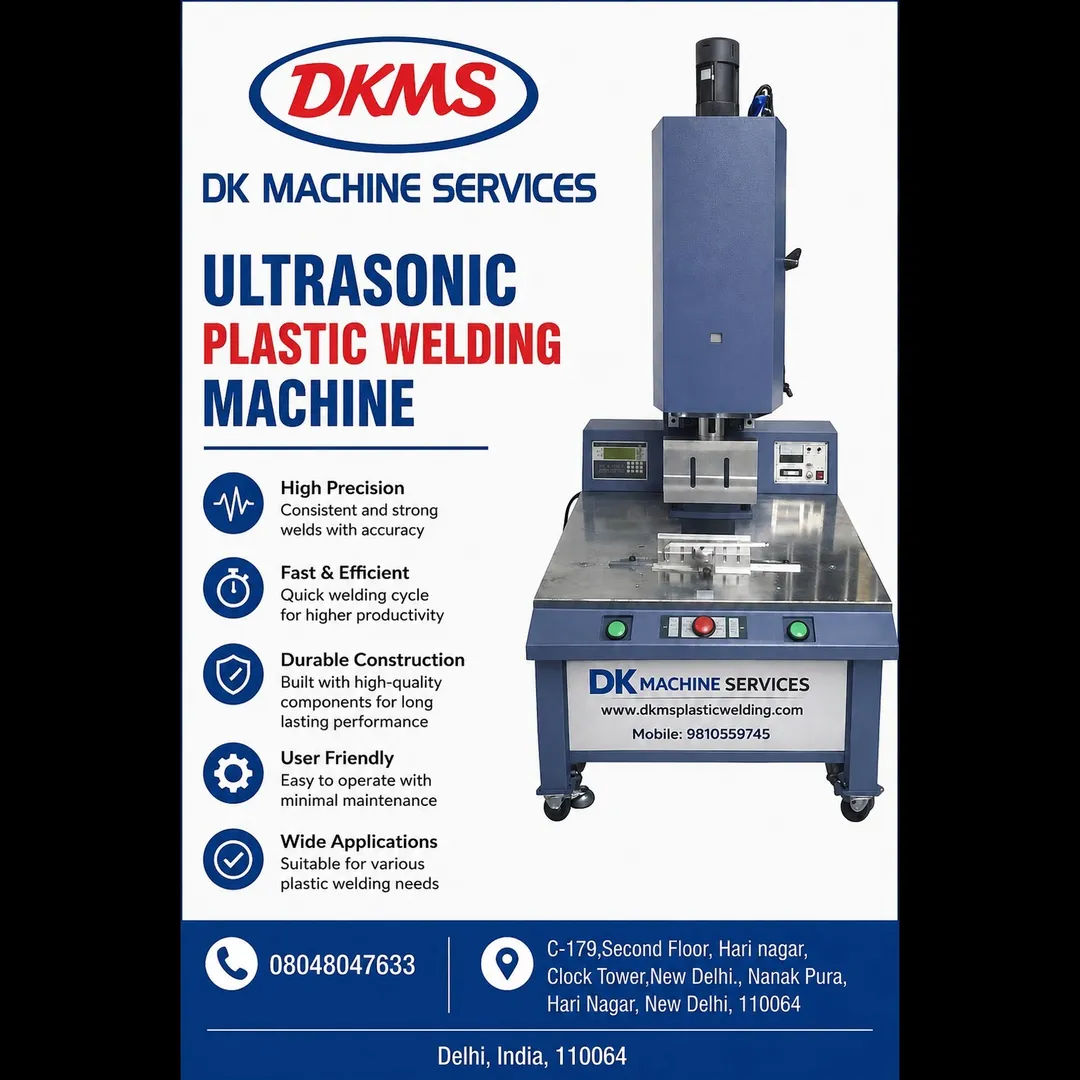
When plastic components need accurate, repeatable and fast joining, a digital ultrasonic plastic welding machine can provide better process control than a conventional manual welding setup. It uses high-frequency ultrasonic vibration to generate localized heat at the joint between compatible thermoplastic components, creating a strong and consistent weld without relying on adhesives or additional joining materials.
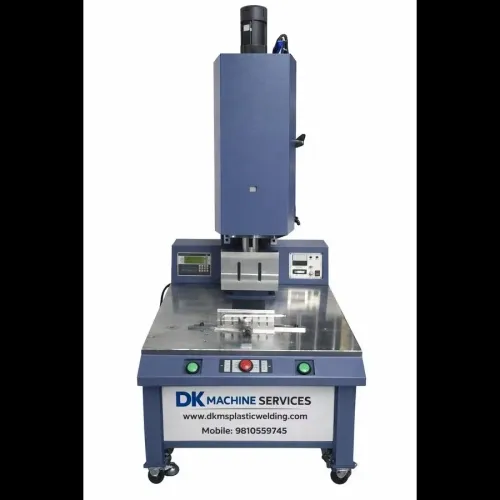
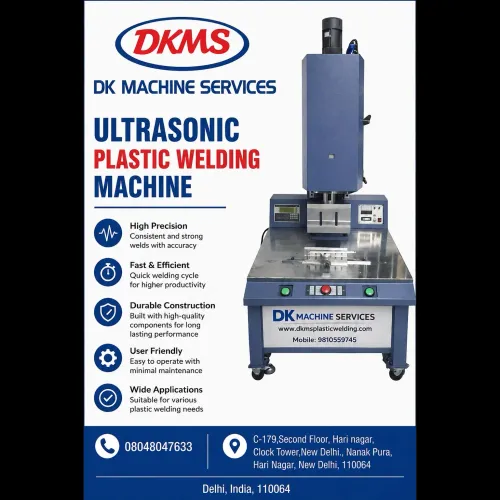
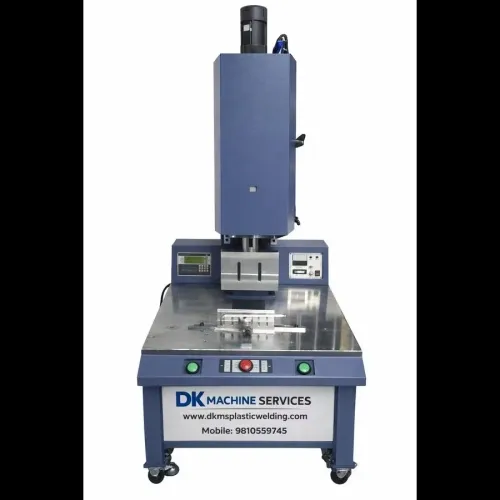
DK Machine Services manufactures and supplies digital ultrasonic plastic welding machines for industrial applications where welding parameters, repeatability and production consistency are important. The company offers digital systems with HMI-based controls, automatic frequency tuning and configurable welding parameters for different plastic component requirements. Its DK2015D model, for example, is specified as a 20 kHz, 1500 W digital ultrasonic plastic welding machine.
What Is a Digital Ultrasonic Plastic Welding Machine?
A digital ultrasonic plastic welding machine is an industrial joining system designed to weld compatible thermoplastic components using high-frequency mechanical vibrations. The machine converts electrical energy into ultrasonic vibration, which is transferred through the ultrasonic converter, booster and horn to the component.
At the welding interface, controlled vibration and pressure generate localized heat. The thermoplastic material softens at the joint area and forms a bond when the welding cycle is completed.
The digital control system allows important process parameters to be monitored and adjusted through an HMI or digital interface. This makes the technology particularly useful when manufacturers need repeatable welding conditions across production batches.
How Does Digital Ultrasonic Plastic Welding Work?
The process begins when the plastic components are positioned accurately inside a fixture. The machine applies controlled pressure while the ultrasonic system generates high-frequency vibration.
The ultrasonic horn transfers this mechanical energy to the selected welding area. The resulting localized heat softens the thermoplastic interface, allowing the two components to join. After the ultrasonic cycle ends, the parts are held under controlled pressure until the joint stabilizes.
The exact welding result depends on several factors, including plastic material, component geometry, joint design, horn configuration, pressure, amplitude, welding time and production requirements. Therefore, selecting the machine alone is not enough; proper tooling and process development are equally important.
Digital Control for Repeatable Plastic Welding
One of the main advantages of a digital ultrasonic welding system is its ability to provide greater control over welding parameters.
The DK2015D system listed by DK Machine Services supports time, energy and time-plus-energy welding modes. Parameters such as weld time, delay time, hold time, pressure and amplitude can be configured through the HMI. The system also provides automatic frequency scanning and tuning functions.
For manufacturers producing large quantities of plastic components, this level of process control can help establish more consistent welding conditions from one production cycle to another.
Key Features of a Digital Ultrasonic Welding Machine
A modern digital ultrasonic plastic welding machine can incorporate automatic frequency tuning, digital parameter control, HMI-based operation, overload protection, welding-cycle monitoring and adjustable amplitude.
DK Machine Services' DK2015D specification includes a 20 kHz ultrasonic system, 1500 W output, adjustable amplitude, automatic horn scanning and frequency tuning, digital parameter display and automatic welding quantity counting. The machine is also specified with air cooling and a 220 V single-phase stabilized power supply.
These features are particularly useful for manufacturers that need controlled and repeatable plastic joining rather than basic manual welding operations.
Digital Ultrasonic Welding Machine Specifications
The DK2015D digital ultrasonic plastic welding machine is specified with a 20 kHz operating frequency and 1500 W machine output. Its amplitude can be adjusted, while the HMI provides access to welding parameters and production-related controls.
The listed machine dimensions are approximately 425 × 630 × 920 mm, with compressed-air requirements specified at approximately 3–8 kg/cm². The system uses air cooling and is designed for semi-automatic industrial operation.
Actual machine selection should be based on the component, material, weld area, production volume and required cycle time rather than specifications alone.
Where Are Digital Ultrasonic Plastic Welding Machines Used?
Digital ultrasonic welding technology can be used across industries where compatible thermoplastic components need repeatable joining.
Automotive Plastic Components
Automotive manufacturers can use ultrasonic welding for suitable plastic housings, assemblies, interior components and other thermoplastic parts where controlled joining is required. DK Machine Services specifically develops plastic welding solutions for automotive component manufacturing.
Electronics and Electrical Products
Digital ultrasonic welding can be considered for plastic housings, connectors, switches, sensors, enclosures and other thermoplastic assemblies where consistent joining is required.
Plastic Packaging
Packaging manufacturers can use ultrasonic welding for compatible plastic packaging components where controlled and repeatable joints are required. The appropriate machine and tooling depend on the packaging material, geometry and production requirements.
Medical and Healthcare Components
For suitable thermoplastic components, ultrasonic welding can provide controlled joining without introducing adhesives into the assembly. Application suitability should always be evaluated according to the material, product design and required performance.
Consumer and Industrial Plastic Products
The technology can also be applied to suitable household products, appliances, industrial components and other plastic assemblies where a clean and repeatable joining process is required.
Advantages of Digital Ultrasonic Plastic Welding
Digital ultrasonic welding can offer several production advantages when the application is properly designed.
The process can provide fast welding cycles, repeatable parameter control, localized heating and reduced dependence on consumable joining materials. Digital parameter management can also help manufacturers establish a controlled welding process for repeated production.
Because ultrasonic energy is concentrated around the intended joint area, the process can be useful for applications where manufacturers want to minimize unnecessary heating of surrounding plastic areas.
The actual performance, however, depends heavily on component design, plastic compatibility, horn geometry, fixture accuracy and machine configuration.
Digital Ultrasonic Welding vs Conventional Ultrasonic Welding
The key difference is generally the level of process control and parameter management rather than the basic ultrasonic welding principle.
A digital machine can provide an HMI-based interface for setting and monitoring welding parameters, along with features such as automatic frequency tuning and production counting. This can be valuable for manufacturers seeking greater repeatability and easier process monitoring.
For production environments where welding conditions need to be reproduced consistently, digital control can offer practical advantages over simpler systems.
20 kHz Digital Ultrasonic Plastic Welding Machine
A 20 kHz ultrasonic welding system is commonly used for industrial plastic welding applications requiring substantial ultrasonic energy and robust tooling.
DK Machine Services lists its DK2015D as a 20 kHz digital ultrasonic plastic welding machine with 1500 W output. The machine includes digital control, automatic frequency tuning and adjustable amplitude.
However, 20 kHz is not automatically the correct frequency for every application. Frequency selection should consider the component size, material, weld area, tooling and required production performance. DK Machine Services' own machine-selection guidance emphasizes application-specific selection rather than choosing equipment solely according to wattage or frequency.
How to Choose the Right Digital Ultrasonic Welding Machine
The correct machine should be selected after understanding the component and manufacturing process.
Start with the type of thermoplastic material. Then evaluate the component dimensions, weld location, joint design and required weld strength. Production quantity and desired cycle time should determine the required machine configuration and automation level.
The ultrasonic horn and fixture should also be considered from the beginning because they have a direct influence on how ultrasonic energy reaches the welding area.
Before requesting a quotation, manufacturers should ideally provide a component sample or drawing, plastic material details, weld location, expected production volume and desired cycle time. This information helps the supplier recommend a more appropriate machine, horn, booster and fixture configuration.
Why Ultrasonic Horn and Fixture Selection Matters
The machine generates ultrasonic energy, but the horn is responsible for transferring that vibration to the component.
A horn must be designed around the welding area and component geometry. If the horn or fixture is poorly matched to the application, manufacturers may experience inconsistent welding, component deformation or inefficient energy transfer.
For customized plastic components, application-specific tooling should therefore be treated as an important part of the complete ultrasonic welding solution rather than as an afterthought.
Digital Ultrasonic Welding Machine for High-Volume Production
Digital ultrasonic welding can be suitable for high-volume manufacturing when the component design, tooling and process parameters are properly developed.
Manufacturers should evaluate the complete production cycle, including component loading, positioning, welding, holding, inspection and unloading. A machine with a fast welding cycle does not automatically guarantee high overall productivity if material handling or component positioning creates bottlenecks.
For higher-volume applications, automation can be integrated around the welding process according to the production requirement.
Customized Digital Ultrasonic Plastic Welding Solutions
Not every plastic component can be effectively handled using a standard machine configuration.
Components with unusual dimensions, multiple welding points, complex geometries or specialized production requirements may require customized tooling or a modified machine arrangement.
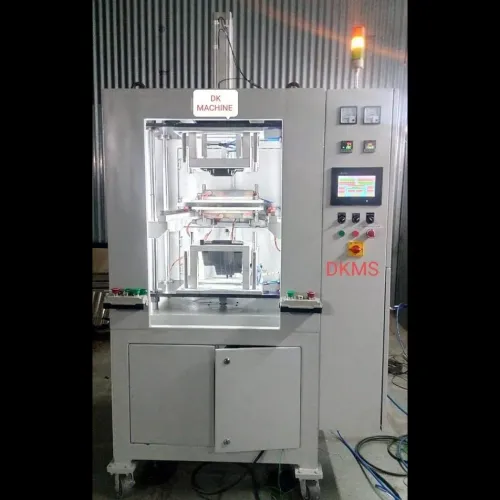
DK Machine Services offers customized plastic welding solutions based on factors such as component dimensions, material, welding requirements, production volume and automation needs.
Digital Ultrasonic Plastic Welding Machine Manufacturer in India
DK Machine
DK Machine Services manufactures and supplies digital ultrasonic plastic welding machines for industrial applications where welding parameters, repeatability and production consistency are important. The company offers digital systems with HMI-based controls, automatic frequency tuning and configurable welding parameters for different plastic component requirements. Its DK2015D model, for example, is specified as a 20 kHz, 1500 W digital ultrasonic plastic welding machine.
What Is a Digital Ultrasonic Plastic Welding Machine?
A digital ultrasonic plastic welding machine is an industrial joining system designed to weld compatible thermoplastic components using high-frequency mechanical vibrations. The machine converts electrical energy into ultrasonic vibration, which is transferred through the ultrasonic converter, booster and horn to the component.
At the welding interface, controlled vibration and pressure generate localized heat. The thermoplastic material softens at the joint area and forms a bond when the welding cycle is completed.
The digital control system allows important process parameters to be monitored and adjusted through an HMI or digital interface. This makes the technology particularly useful when manufacturers need repeatable welding conditions across production batches.
How Does Digital Ultrasonic Plastic Welding Work?
The process begins when the plastic components are positioned accurately inside a fixture. The machine applies controlled pressure while the ultrasonic system generates high-frequency vibration.
The ultrasonic horn transfers this mechanical energy to the selected welding area. The resulting localized heat softens the thermoplastic interface, allowing the two components to join. After the ultrasonic cycle ends, the parts are held under controlled pressure until the joint stabilizes.
The exact welding result depends on several factors, including plastic material, component geometry, joint design, horn configuration, pressure, amplitude, welding time and production requirements. Therefore, selecting the machine alone is not enough; proper tooling and process development are equally important.
Digital Control for Repeatable Plastic Welding
One of the main advantages of a digital ultrasonic welding system is its ability to provide greater control over welding parameters.
The DK2015D system listed by DK Machine Services supports time, energy and time-plus-energy welding modes. Parameters such as weld time, delay time, hold time, pressure and amplitude can be configured through the HMI. The system also provides automatic frequency scanning and tuning functions.
For manufacturers producing large quantities of plastic components, this level of process control can help establish more consistent welding conditions from one production cycle to another.
Key Features of a Digital Ultrasonic Welding Machine
A modern digital ultrasonic plastic welding machine can incorporate automatic frequency tuning, digital parameter control, HMI-based operation, overload protection, welding-cycle monitoring and adjustable amplitude.
DK Machine Services' DK2015D specification includes a 20 kHz ultrasonic system, 1500 W output, adjustable amplitude, automatic horn scanning and frequency tuning, digital parameter display and automatic welding quantity counting. The machine is also specified with air cooling and a 220 V single-phase stabilized power supply.
These features are particularly useful for manufacturers that need controlled and repeatable plastic joining rather than basic manual welding operations.
Digital Ultrasonic Welding Machine Specifications
The DK2015D digital ultrasonic plastic welding machine is specified with a 20 kHz operating frequency and 1500 W machine output. Its amplitude can be adjusted, while the HMI provides access to welding parameters and production-related controls.
The listed machine dimensions are approximately 425 × 630 × 920 mm, with compressed-air requirements specified at approximately 3–8 kg/cm². The system uses air cooling and is designed for semi-automatic industrial operation.
Actual machine selection should be based on the component, material, weld area, production volume and required cycle time rather than specifications alone.
Where Are Digital Ultrasonic Plastic Welding Machines Used?
Digital ultrasonic welding technology can be used across industries where compatible thermoplastic components need repeatable joining.
Automotive Plastic Components
Automotive manufacturers can use ultrasonic welding for suitable plastic housings, assemblies, interior components and other thermoplastic parts where controlled joining is required. DK Machine Services specifically develops plastic welding solutions for automotive component manufacturing.
Electronics and Electrical Products
Digital ultrasonic welding can be considered for plastic housings, connectors, switches, sensors, enclosures and other thermoplastic assemblies where consistent joining is required.
Plastic Packaging
Packaging manufacturers can use ultrasonic welding for compatible plastic packaging components where controlled and repeatable joints are required. The appropriate machine and tooling depend on the packaging material, geometry and production requirements.
Medical and Healthcare Components
For suitable thermoplastic components, ultrasonic welding can provide controlled joining without introducing adhesives into the assembly. Application suitability should always be evaluated according to the material, product design and required performance.
Consumer and Industrial Plastic Products
The technology can also be applied to suitable household products, appliances, industrial components and other plastic assemblies where a clean and repeatable joining process is required.
Advantages of Digital Ultrasonic Plastic Welding
Digital ultrasonic welding can offer several production advantages when the application is properly designed.
The process can provide fast welding cycles, repeatable parameter control, localized heating and reduced dependence on consumable joining materials. Digital parameter management can also help manufacturers establish a controlled welding process for repeated production.
Because ultrasonic energy is concentrated around the intended joint area, the process can be useful for applications where manufacturers want to minimize unnecessary heating of surrounding plastic areas.
The actual performance, however, depends heavily on component design, plastic compatibility, horn geometry, fixture accuracy and machine configuration.
Digital Ultrasonic Welding vs Conventional Ultrasonic Welding
The key difference is generally the level of process control and parameter management rather than the basic ultrasonic welding principle.
A digital machine can provide an HMI-based interface for setting and monitoring welding parameters, along with features such as automatic frequency tuning and production counting. This can be valuable for manufacturers seeking greater repeatability and easier process monitoring.
For production environments where welding conditions need to be reproduced consistently, digital control can offer practical advantages over simpler systems.
20 kHz Digital Ultrasonic Plastic Welding Machine
A 20 kHz ultrasonic welding system is commonly used for industrial plastic welding applications requiring substantial ultrasonic energy and robust tooling.
DK Machine Services lists its DK2015D as a 20 kHz digital ultrasonic plastic welding machine with 1500 W output. The machine includes digital control, automatic frequency tuning and adjustable amplitude.
However, 20 kHz is not automatically the correct frequency for every application. Frequency selection should consider the component size, material, weld area, tooling and required production performance. DK Machine Services' own machine-selection guidance emphasizes application-specific selection rather than choosing equipment solely according to wattage or frequency.
How to Choose the Right Digital Ultrasonic Welding Machine
The correct machine should be selected after understanding the component and manufacturing process.
Start with the type of thermoplastic material. Then evaluate the component dimensions, weld location, joint design and required weld strength. Production quantity and desired cycle time should determine the required machine configuration and automation level.
The ultrasonic horn and fixture should also be considered from the beginning because they have a direct influence on how ultrasonic energy reaches the welding area.
Before requesting a quotation, manufacturers should ideally provide a component sample or drawing, plastic material details, weld location, expected production volume and desired cycle time. This information helps the supplier recommend a more appropriate machine, horn, booster and fixture configuration.
Why Ultrasonic Horn and Fixture Selection Matters
The machine generates ultrasonic energy, but the horn is responsible for transferring that vibration to the component.
A horn must be designed around the welding area and component geometry. If the horn or fixture is poorly matched to the application, manufacturers may experience inconsistent welding, component deformation or inefficient energy transfer.
For customized plastic components, application-specific tooling should therefore be treated as an important part of the complete ultrasonic welding solution rather than as an afterthought.
Digital Ultrasonic Welding Machine for High-Volume Production
Digital ultrasonic welding can be suitable for high-volume manufacturing when the component design, tooling and process parameters are properly developed.
Manufacturers should evaluate the complete production cycle, including component loading, positioning, welding, holding, inspection and unloading. A machine with a fast welding cycle does not automatically guarantee high overall productivity if material handling or component positioning creates bottlenecks.
For higher-volume applications, automation can be integrated around the welding process according to the production requirement.
Customized Digital Ultrasonic Plastic Welding Solutions
Not every plastic component can be effectively handled using a standard machine configuration.
Components with unusual dimensions, multiple welding points, complex geometries or specialized production requirements may require customized tooling or a modified machine arrangement.
DK Machine Services offers customized plastic welding solutions based on factors such as component dimensions, material, welding requirements, production volume and automation needs.
Digital Ultrasonic Plastic Welding Machine Manufacturer in India
DK Machine
Keywords